

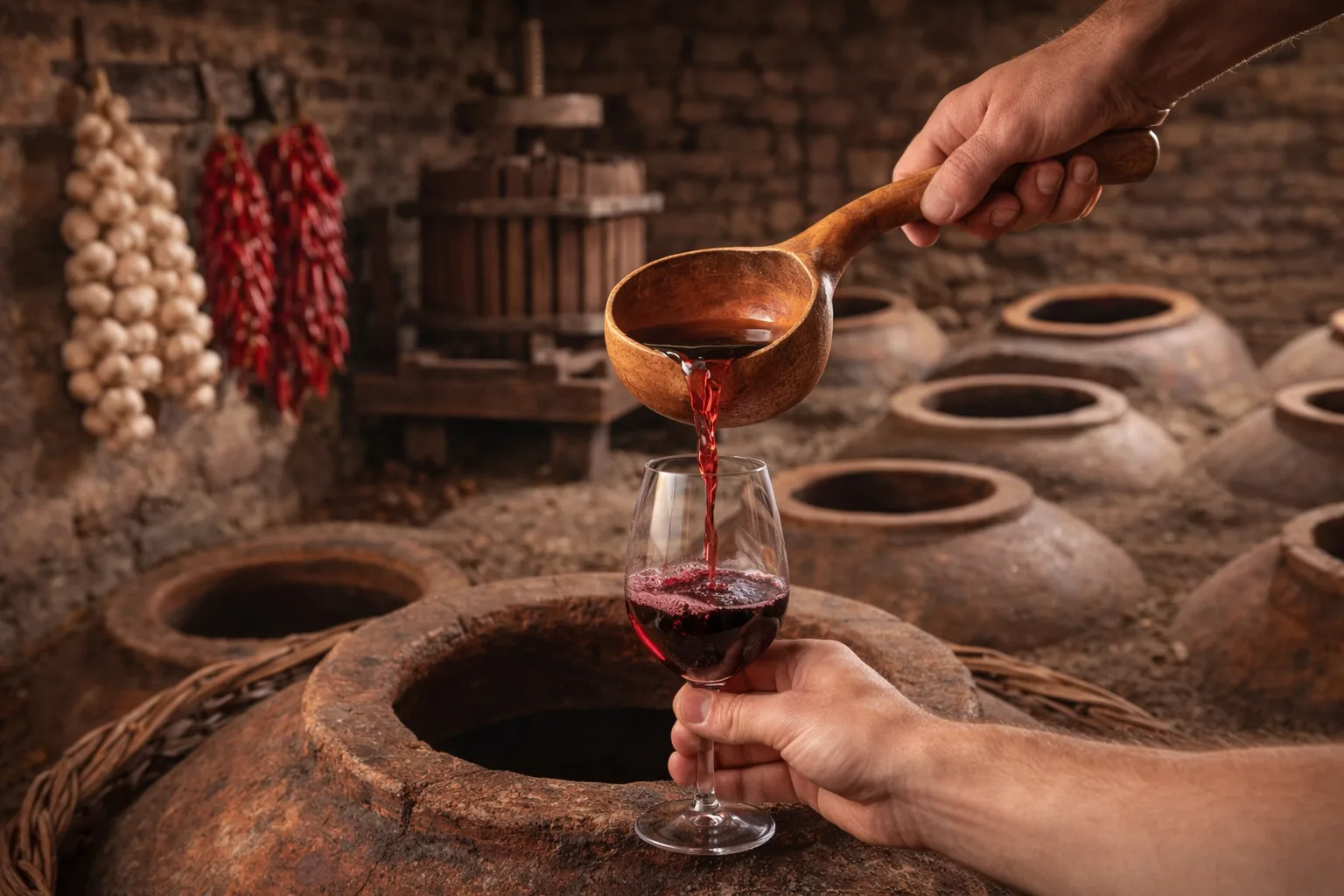
Photos generated by AI
Introduction
In Georgia, wine is far more than a drink — it is history, identity, spirituality, and hospitality woven into everyday life. At the center of this ancient wine culture stands the marani, the traditional Georgian wine cellar where wine has been produced, stored, and celebrated for thousands of years.
A marani is not simply a storage space. It is a sacred place where generations gather during harvest season, where families preserve ancient winemaking traditions, and where the soul of Georgian culture continues to live.
Hidden beneath stone floors or beside rustic countryside homes, Georgian maranis are filled with massive clay qvevri, wooden tools, the aroma of fermenting grapes, and stories passed down through centuries.
The Ancient Tradition of Georgian Wine
Georgia is widely considered one of the oldest wine-producing regions in the world, with archaeological evidence showing over 8,000 years of continuous winemaking history.
For centuries, Georgian families have produced wine using methods that remain remarkably unchanged. The center of this tradition is the qvevri — the large clay vessel buried underground for fermentation and storage.
The marani became the natural home for these qvevri, protecting the wine from temperature changes while creating an ideal environment for aging.
Throughout Georgian history, nearly every rural family maintained its own marani, producing wine not only for daily life but also for religious celebrations, supras, weddings, and guests.
What Is a Marani?
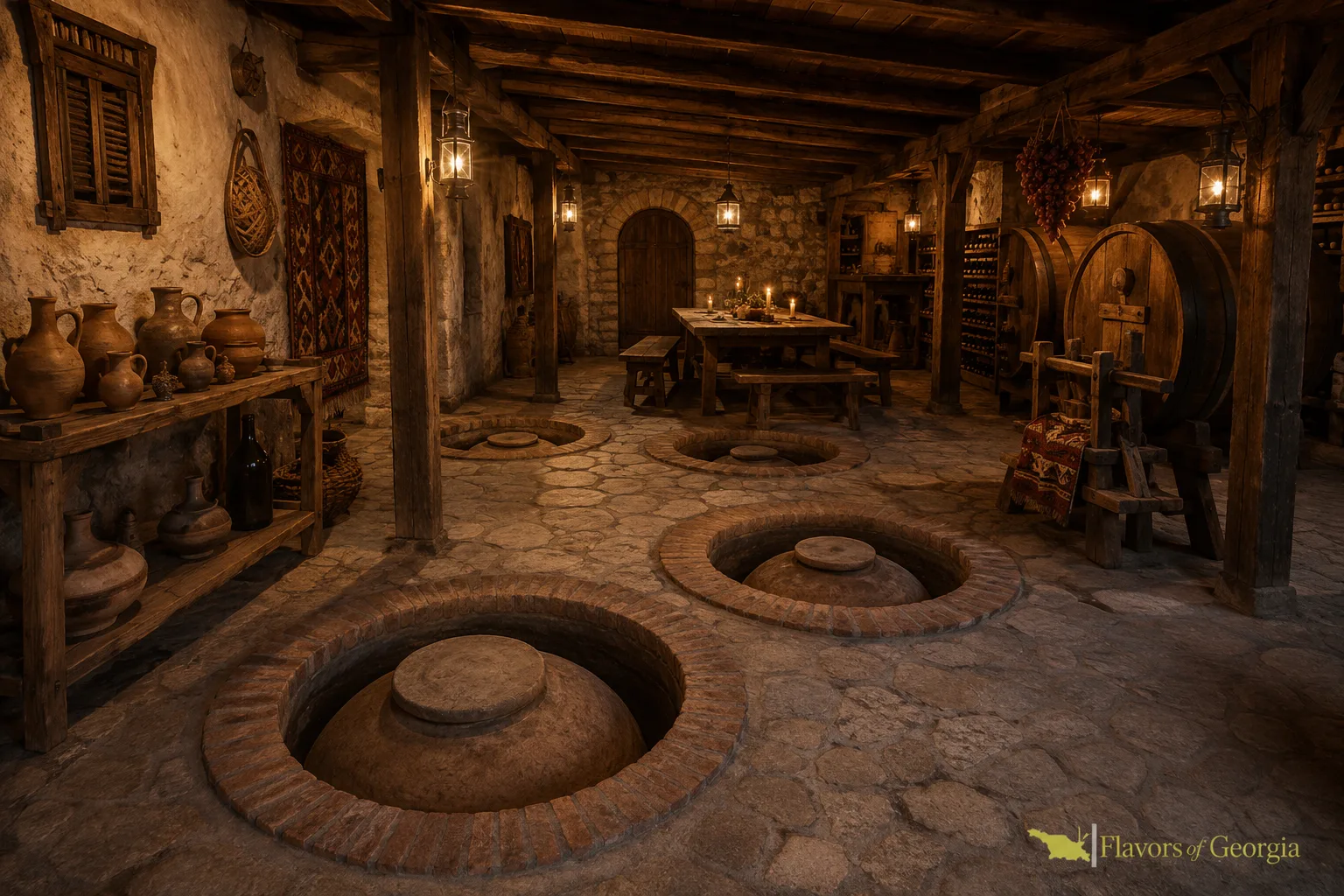
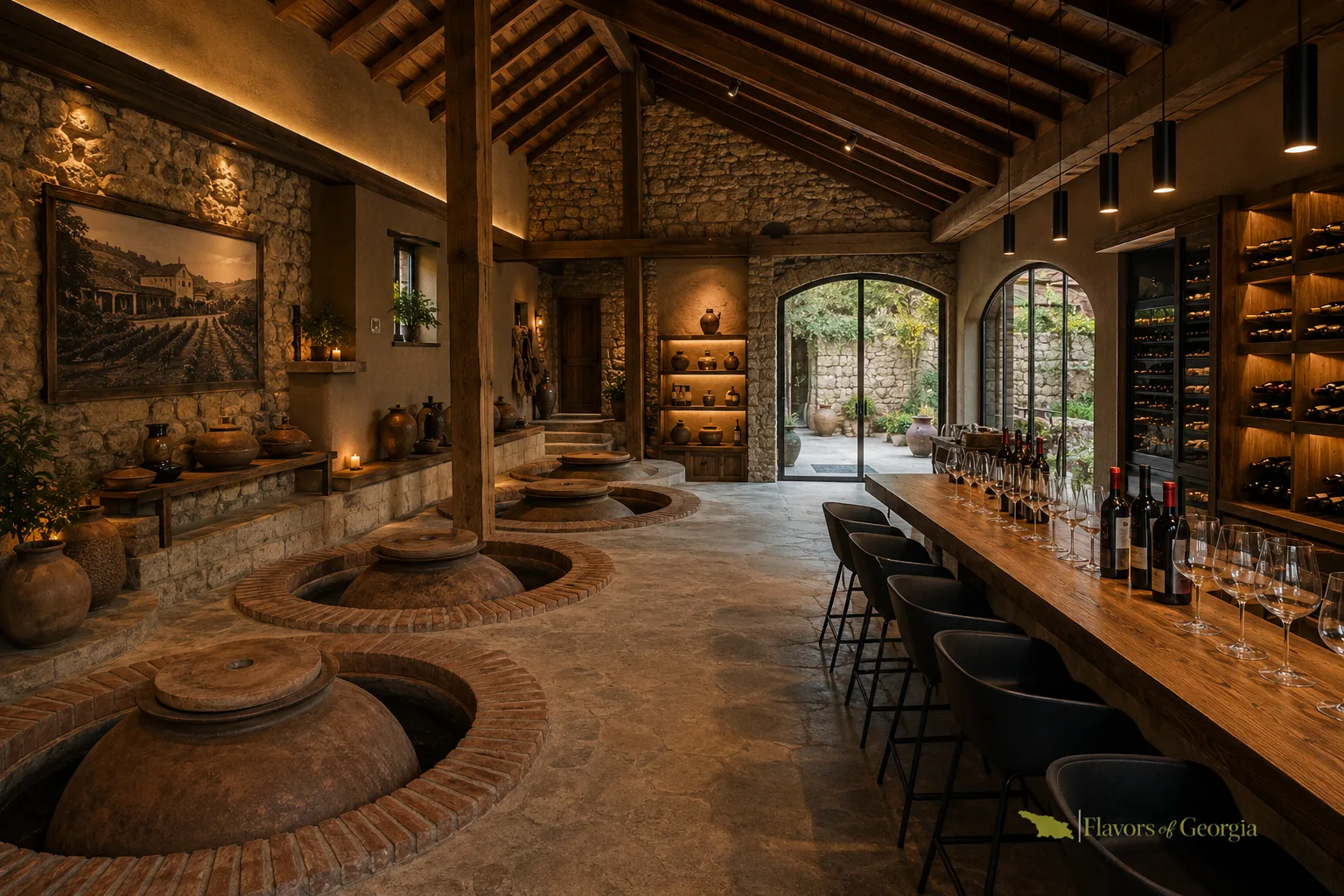
A traditional Georgian marani is a dedicated wine cellar or wine house built specifically for winemaking and wine storage.
Maranis are usually constructed from:
Stone
Brick
Wood
Clay materials
Inside, visitors often find:
Buried qvevri
Wooden wine tools
Clay pitchers
Traditional cups and horns
Oak barrels
Hanging herbs and dried foods
The atmosphere inside a marani is unique — cool, earthy, quiet, and deeply connected to Georgian rural life.
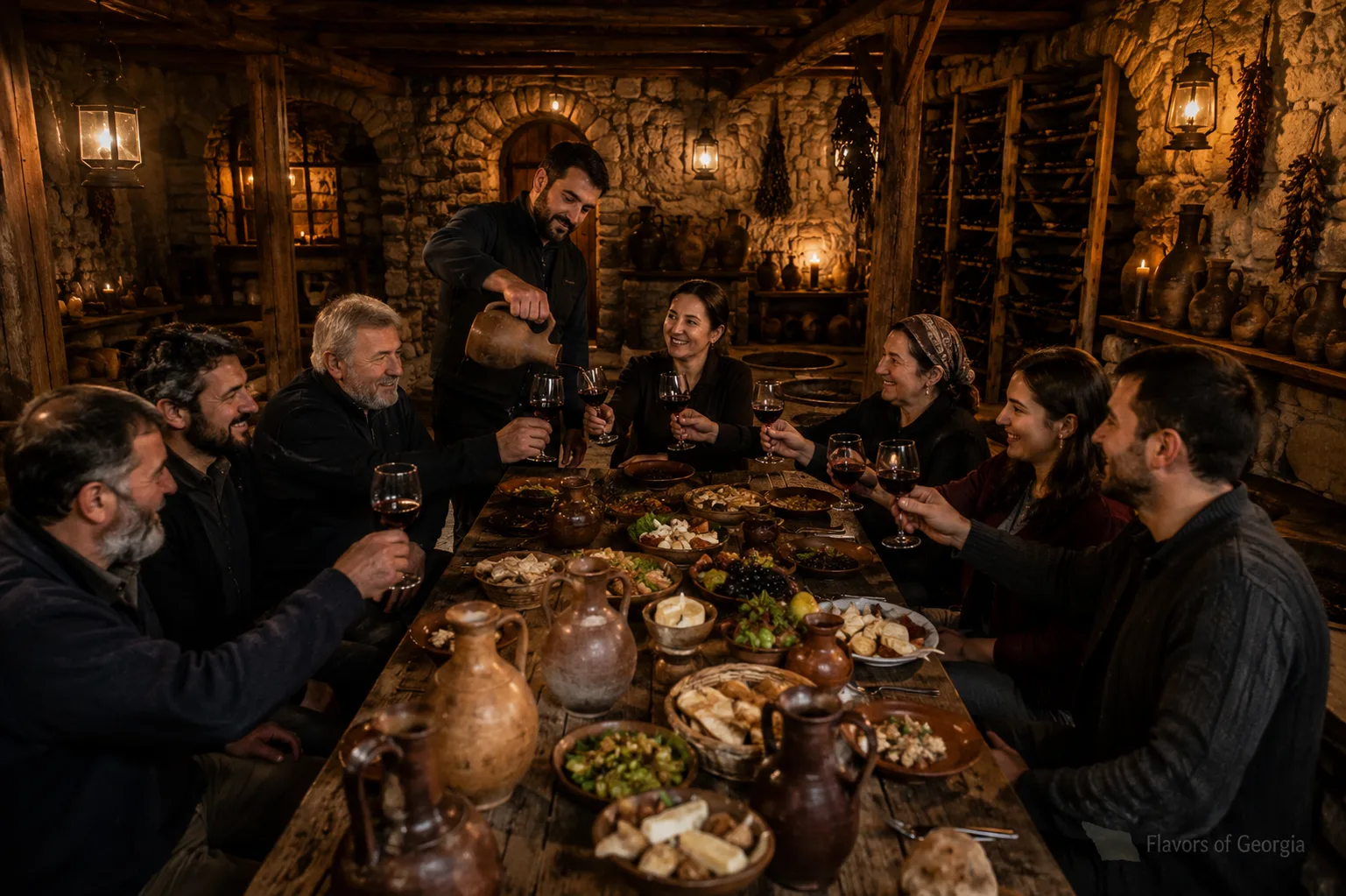
Many traditional maranis also include long wooden tables where guests gather for wine tastings and supras.
Qvevri – The Soul of the Marani
No marani can exist without the qvevri.
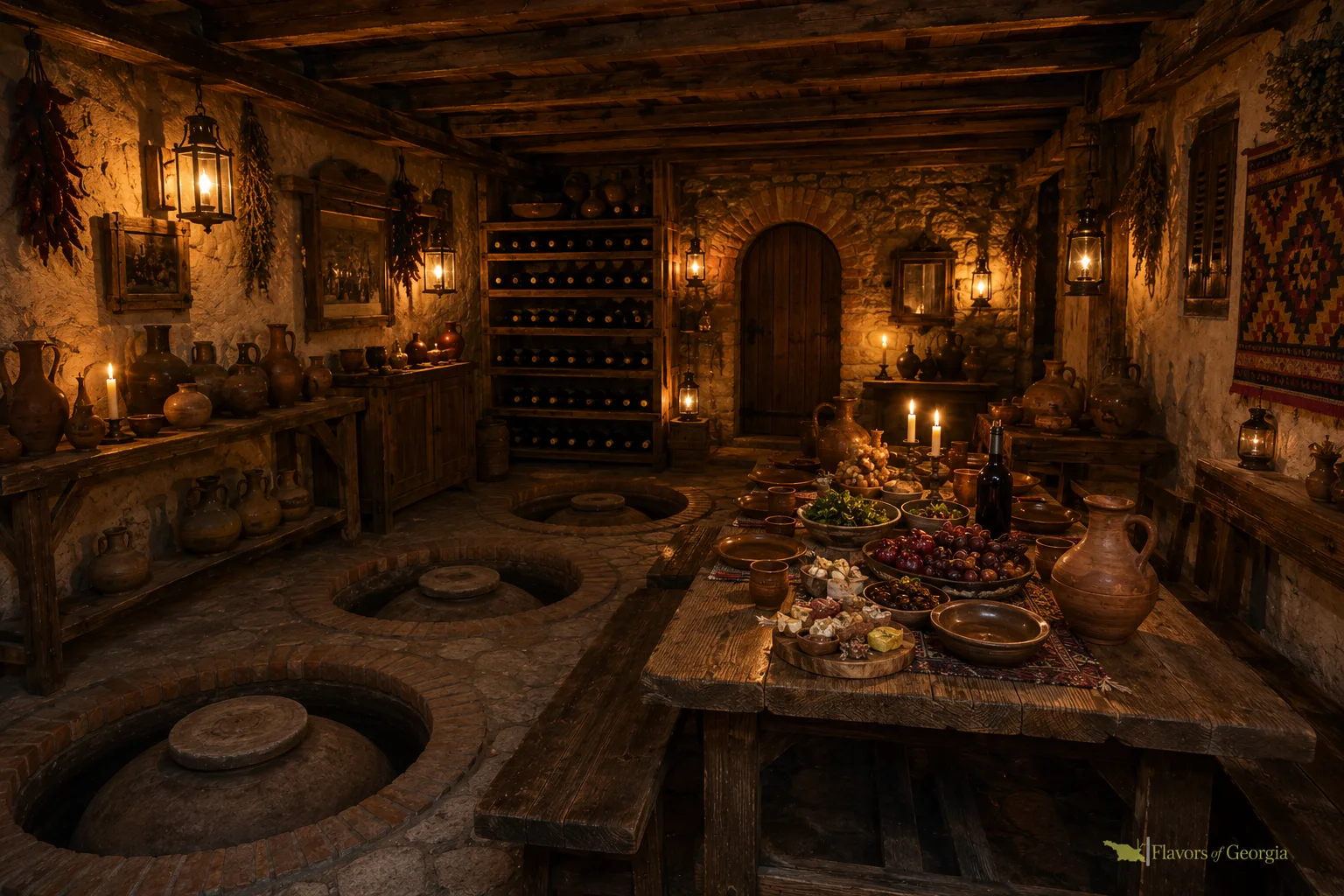
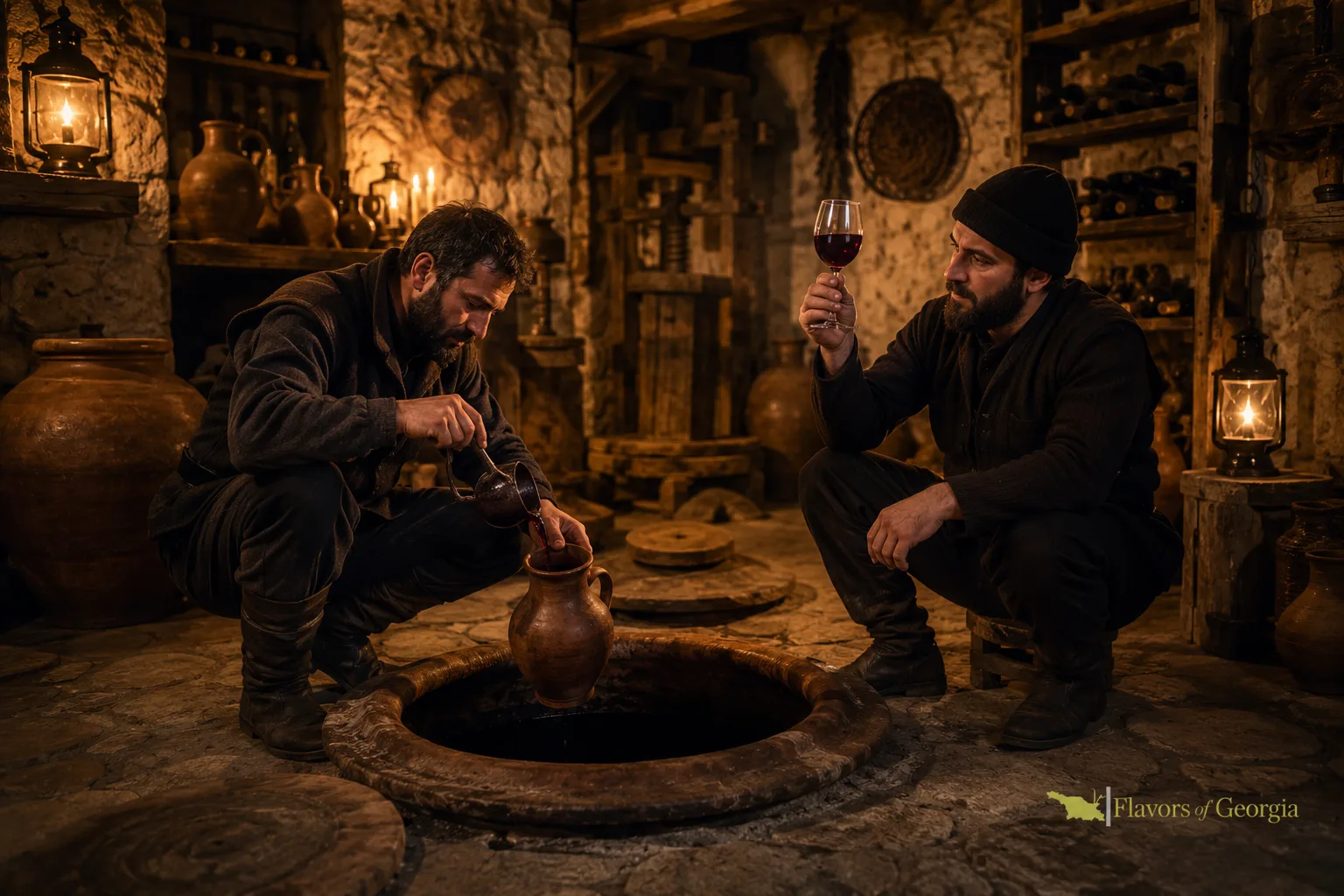
These enormous egg-shaped clay vessels are buried underground, leaving only the opening visible above the floor. Georgian winemakers ferment grape juice, skins, seeds, and sometimes stems inside the qvevri using natural methods passed down through generations.
The underground placement helps maintain stable temperatures during fermentation and aging.
This ancient technique creates wines with:
Deep texture
Complex flavors
Natural tannins
Distinctive earthy character
Today, qvevri winemaking is recognized by UNESCO as part of the Intangible Cultural Heritage of Humanity.
The Traditional Georgian Satsnakheli (Wine Press)
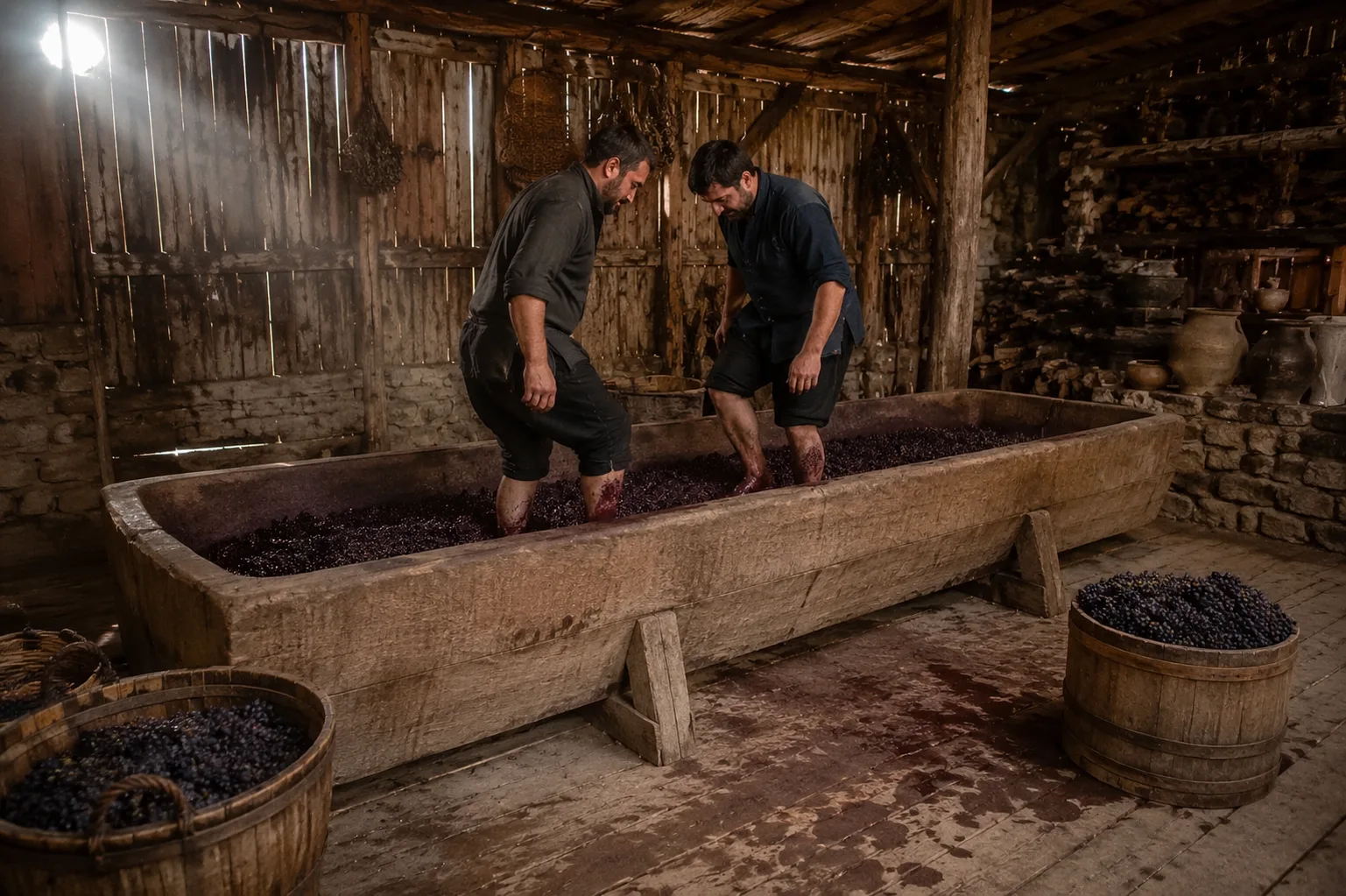
One of the most fascinating parts of a traditional marani is the satsnakheli — the ancient Georgian wooden grape press used during harvest season.
Traditionally handcrafted from large pieces of wood, the satsnakheli was designed as a wide open wooden basin where freshly harvested grapes were placed.
During the rtveli (grape harvest), family members and villagers would step inside the satsnakheli barefoot and crush the grapes by foot, slowly releasing juice for winemaking.
This process was not only practical but also deeply social and celebratory.
The fresh grape juice flowed from the wooden press into containers before eventually being transferred into qvevri for fermentation.
Traditional satsnakheli were often beautifully carved and built to last for generations. Some antique examples can still be found in historic Georgian villages and family maranis today.
The satsnakheli represents one of the oldest surviving symbols of Georgian communal winemaking traditions.
Rtveli – The Georgian Harvest Celebration
The marani becomes especially alive during rtveli, Georgia’s traditional grape harvest season.
Families, neighbors, and friends gather together to harvest grapes, prepare food, sing songs, and make wine.
Rtveli combines:
Hard work
Celebration
Music
Supra feasts
Traditional rituals
After pressing the grapes in the satsnakheli, fresh juice is carried into the marani where the winemaking process begins.
For many Georgians, rtveli is one of the most emotional and meaningful times of the year.
Wine and Hospitality in the Marani
Hospitality is central to Georgian identity, and the marani plays an important role in welcoming guests.
Visitors entering a traditional marani are often invited to:
Taste homemade wines
Participate in toasts
Hear family stories
Learn traditional winemaking methods
A marani is both a workplace and a social space — somewhere between a cellar, family gathering room, and cultural sanctuary.
Many modern wineries in Georgia continue to preserve authentic marani architecture while combining it with contemporary tourism experiences.
The Atmosphere of a Traditional Marani
Traditional maranis possess a unique atmosphere unlike modern industrial wineries.
Inside a marani, visitors experience:
Earthy clay aromas
Cool stone interiors
Candlelight reflections on qvevri lids
Wooden beams and handmade tools
Silence broken by conversation and wine pouring
The space feels timeless — connected equally to the ancient past and the present moment.
Modern Maranis and Wine Tourism
Today, Georgian maranis attract visitors from around the world interested in authentic wine culture.
Regions such as:
Kakheti
Imereti
Kartli
Racha
offer traditional wine cellar experiences where tourists can explore qvevri winemaking, taste natural wines, and participate in supra traditions.
Many family-owned maranis now combine centuries-old methods with boutique hospitality, helping preserve Georgian winemaking heritage for future generations.
Conclusion
The Georgian marani is far more than a wine cellar. It is a living symbol of family, history, craftsmanship, and hospitality.
From the buried qvevri to the ancient wooden satsnakheli where grapes were once crushed by foot, every corner of the marani reflects thousands of years of uninterrupted Georgian wine culture.
Even today, the marani remains one of the most authentic and meaningful expressions of Georgian identity — a place where wine, tradition, and human connection come together.


Search Recipes by category

 46
46  Chef Beso


Login Required
Loading login form...