

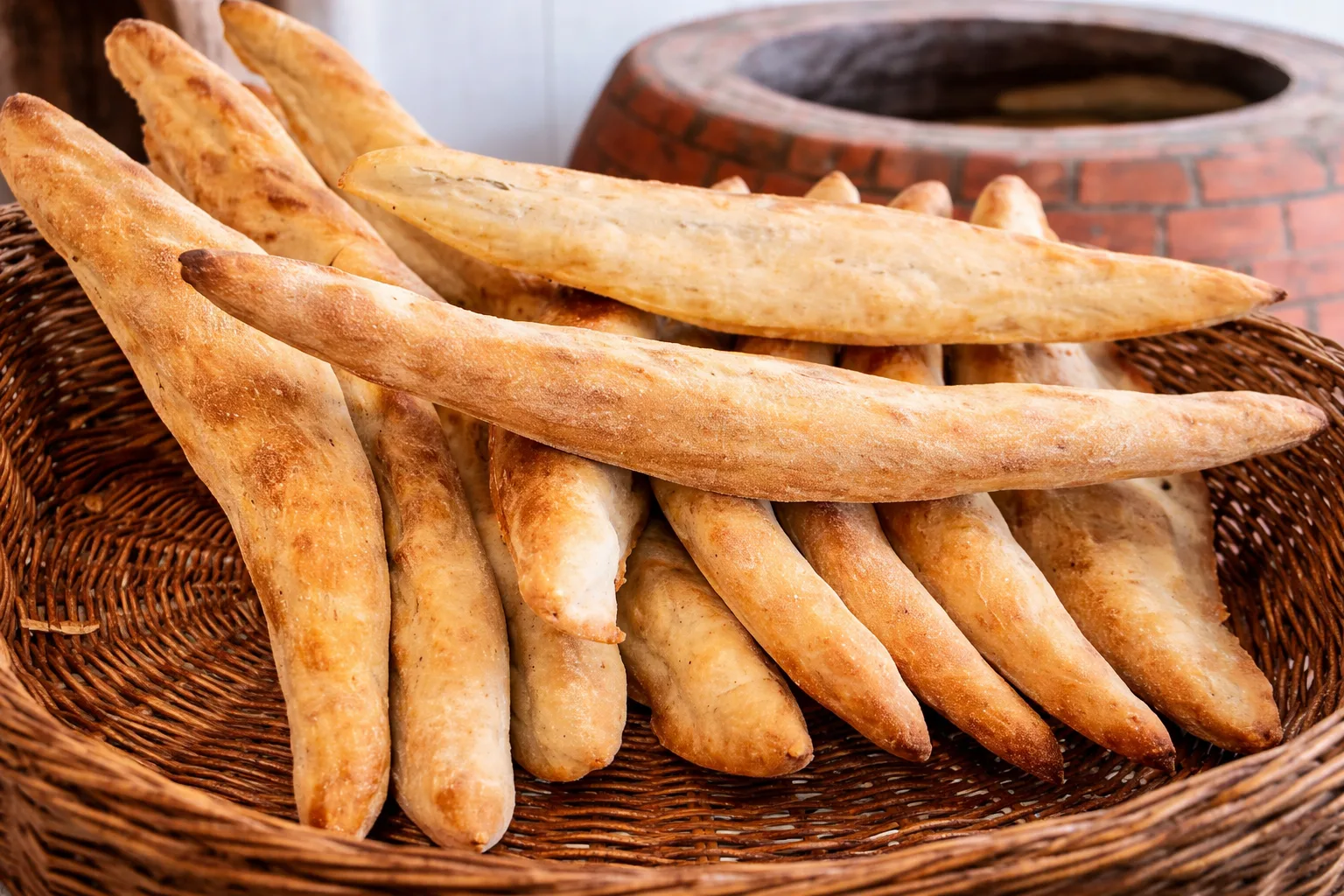
Photos generated by AI
Introduction
Few aromas are as unforgettable as the smell of freshly baked Georgian bread emerging from a traditional tone oven. Crispy on the outside, soft and airy on the inside, shoti bread — also known as dedas puri (“mother’s bread”) — has been an essential part of Georgian daily life for centuries. In Georgia, bread is far more than food. It is a symbol of hospitality, family, faith, and tradition. Whether served beside cheese, soups, khinkali, or a festive supra table, warm shoti bread remains one of the most beloved staples of Georgian cuisine. At the center of this tradition stands the tone, the deep clay oven responsible for giving Georgian bread its unique texture, shape, and flavor.
The History of Georgian Bread
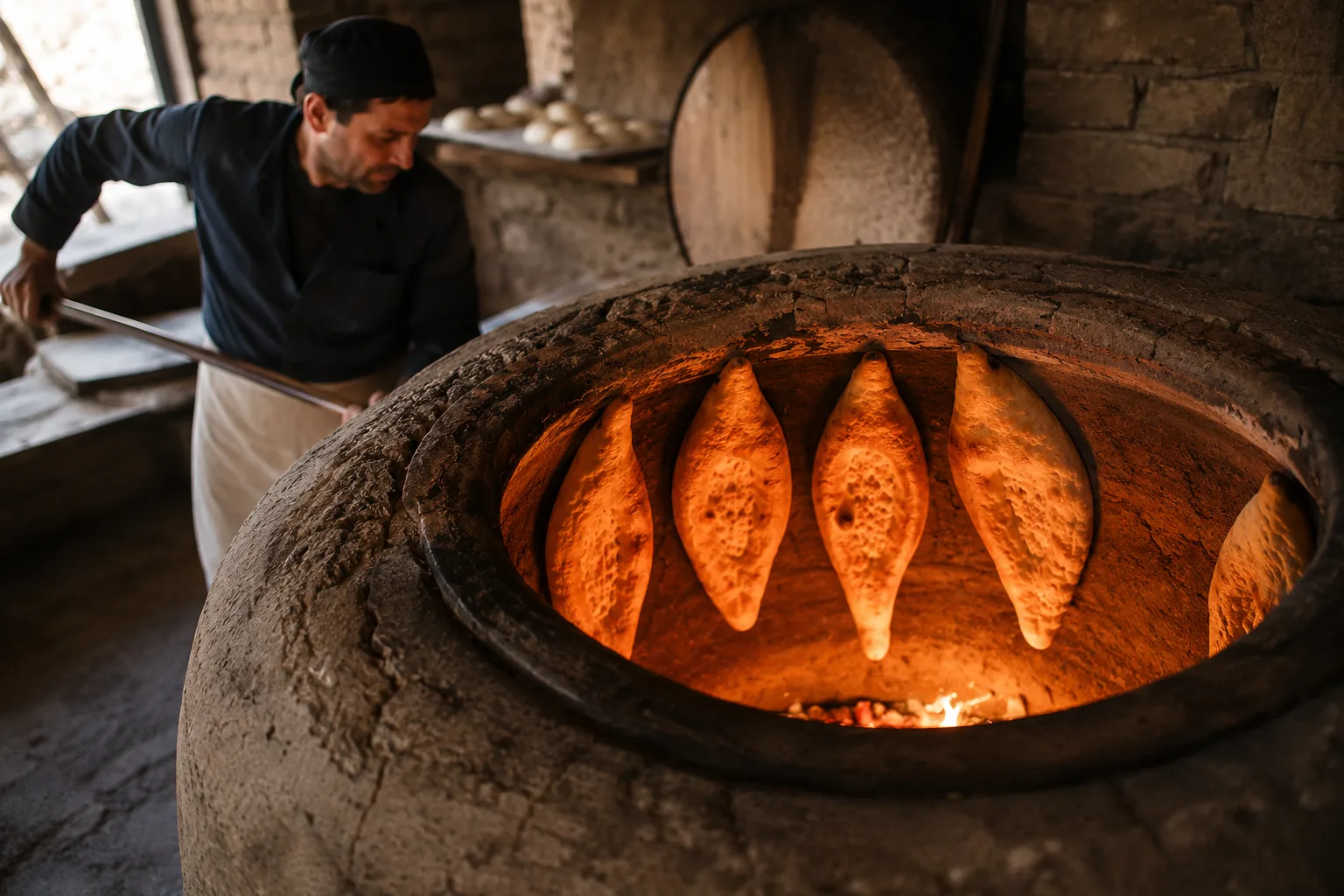
Bread-making in Georgia dates back thousands of years. Archaeological evidence suggests that ancient Georgian civilizations cultivated wheat and baked bread long before many parts of Europe.
Georgia is considered one of the oldest wheat-growing regions in the world, and bread has always held deep cultural and spiritual importance in Georgian society. Traditional bread was often prepared for:
Family gatherings
Religious holidays
Weddings
Supra feasts
Harvest celebrations
In many Georgian homes, bread was treated with enormous respect. Wasting bread was considered unacceptable, and even crumbs were carefully collected.
What Is Shoti Bread?
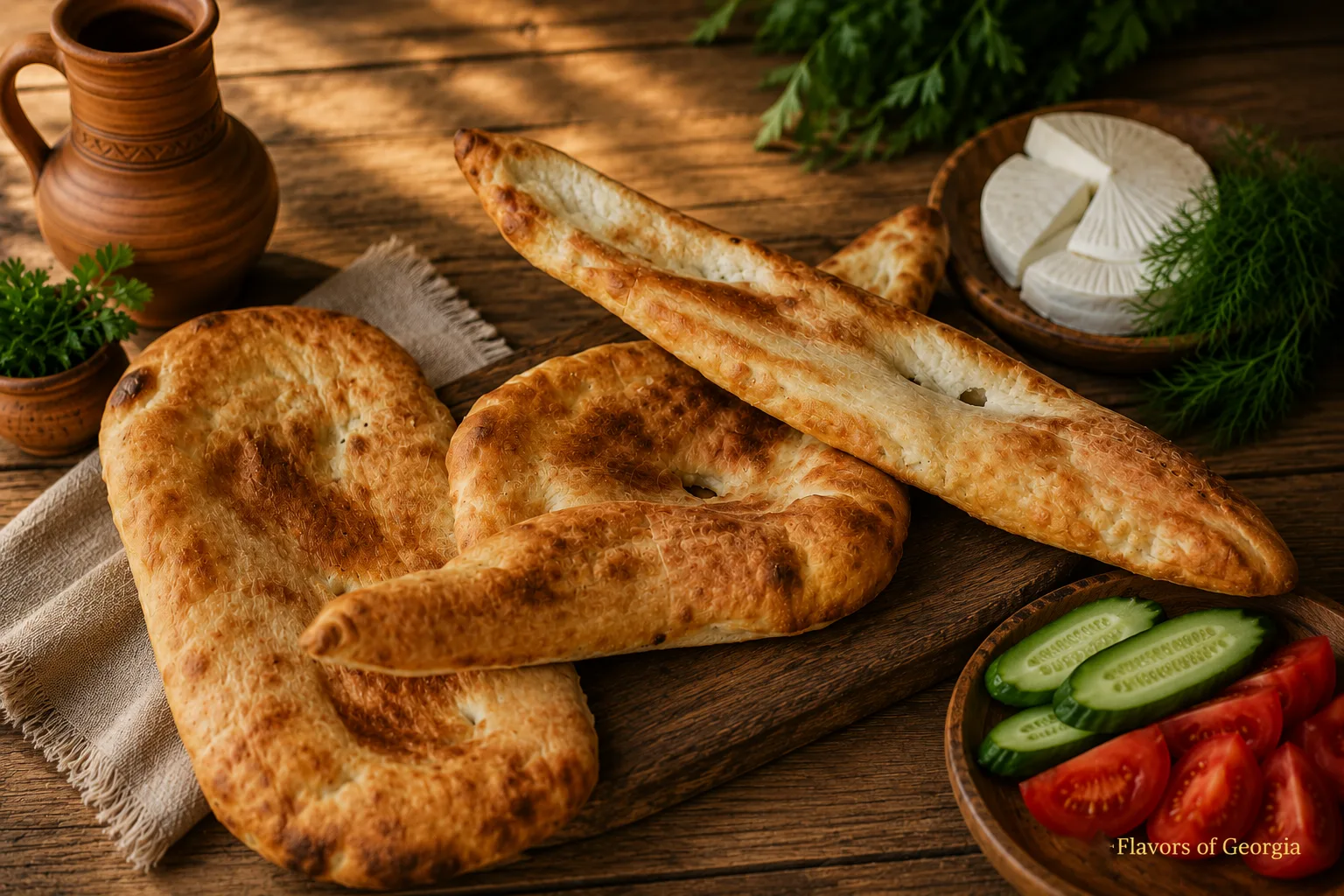
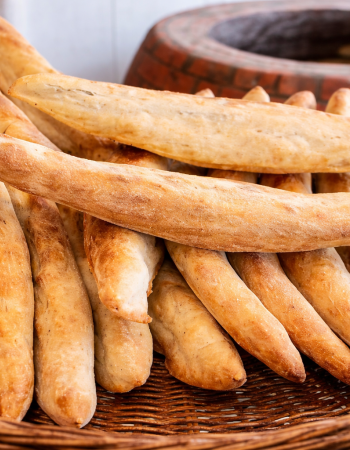
Shoti is the iconic canoe-shaped Georgian bread baked in a traditional tone oven. It is known for:
A crispy golden crust
Soft and chewy interior
Distinct elongated shape
Smoky aroma from the clay oven
The bread is usually made from simple ingredients:
Flour
Water
Yeast
Salt
Despite its simplicity, the baking technique gives shoti its extraordinary flavor and texture.
The name dedas puri (“mother’s bread”) reflects the emotional connection Georgians have with traditional homemade bread.
The Tone Oven – The Soul of Georgian Baking
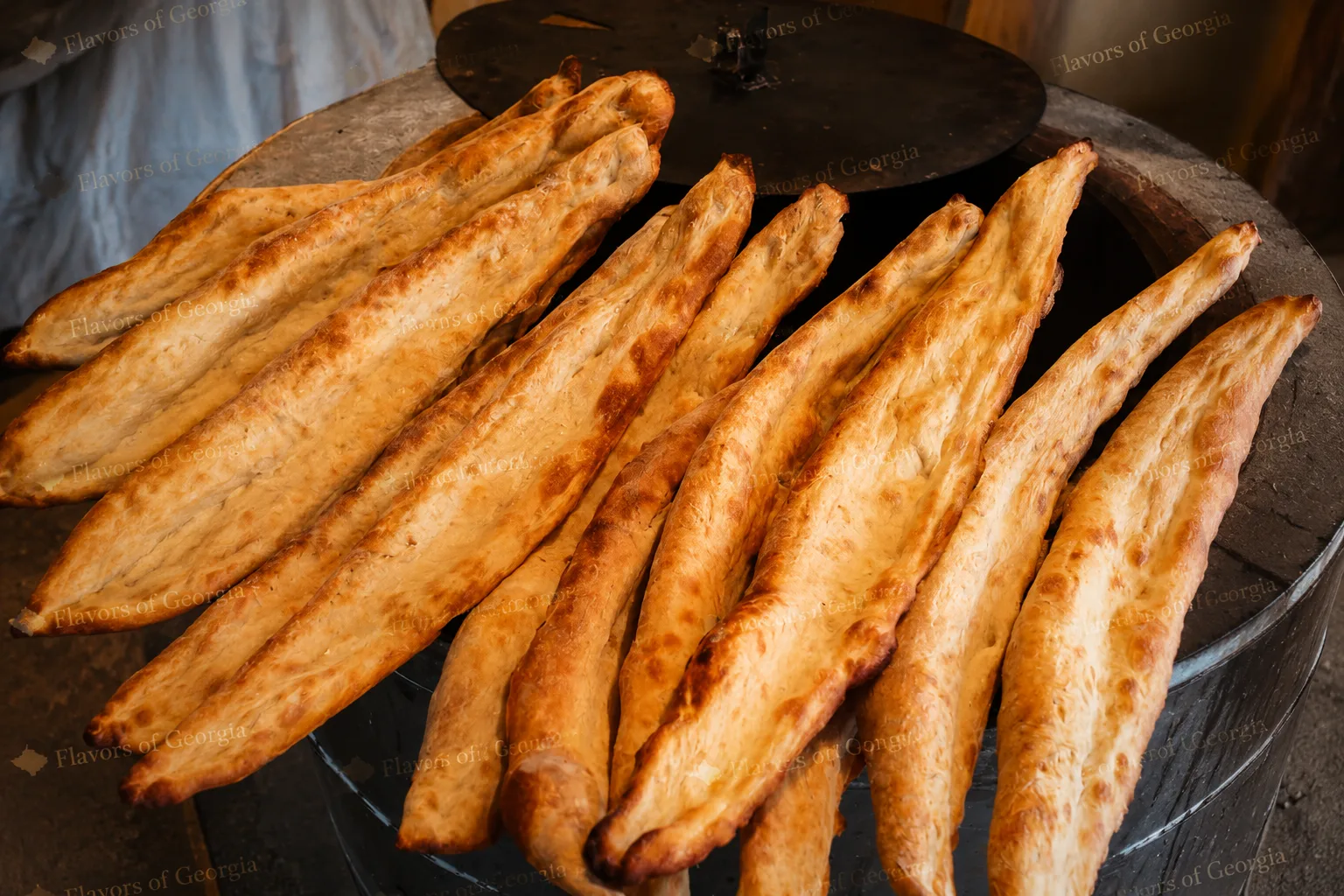
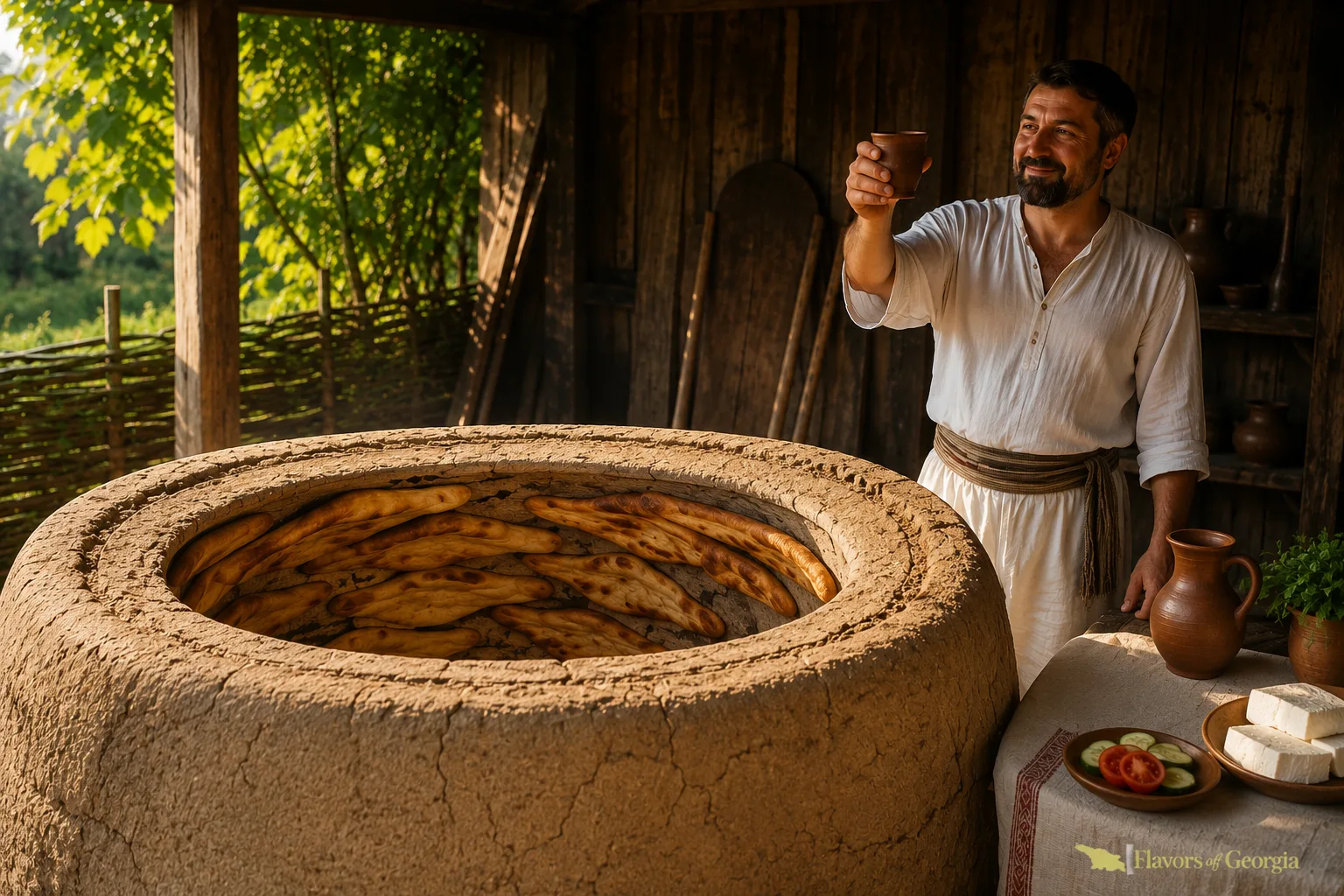
The tone is a deep circular clay oven similar in concept to the tandoor ovens of Central Asia and the Middle East, though Georgian baking traditions developed their own unique style.
Traditional tone ovens are built from clay, brick, and stone. They are heated using wood fire until the interior walls become extremely hot.
What makes Georgian bread unique is the baking method itself. Bakers skillfully stretch the dough and slap it directly onto the inner wall of the tone.
Within minutes, the bread puffs, crisps, and develops its signature texture.
The intense heat creates:
Crispy crust
Slight smoky flavor
Soft airy center
Characteristic blistered surface
A skilled baker, known as a mepurne, can bake dozens of breads in rapid succession using precise timing and years of experience.
The Art of the Georgian Baker
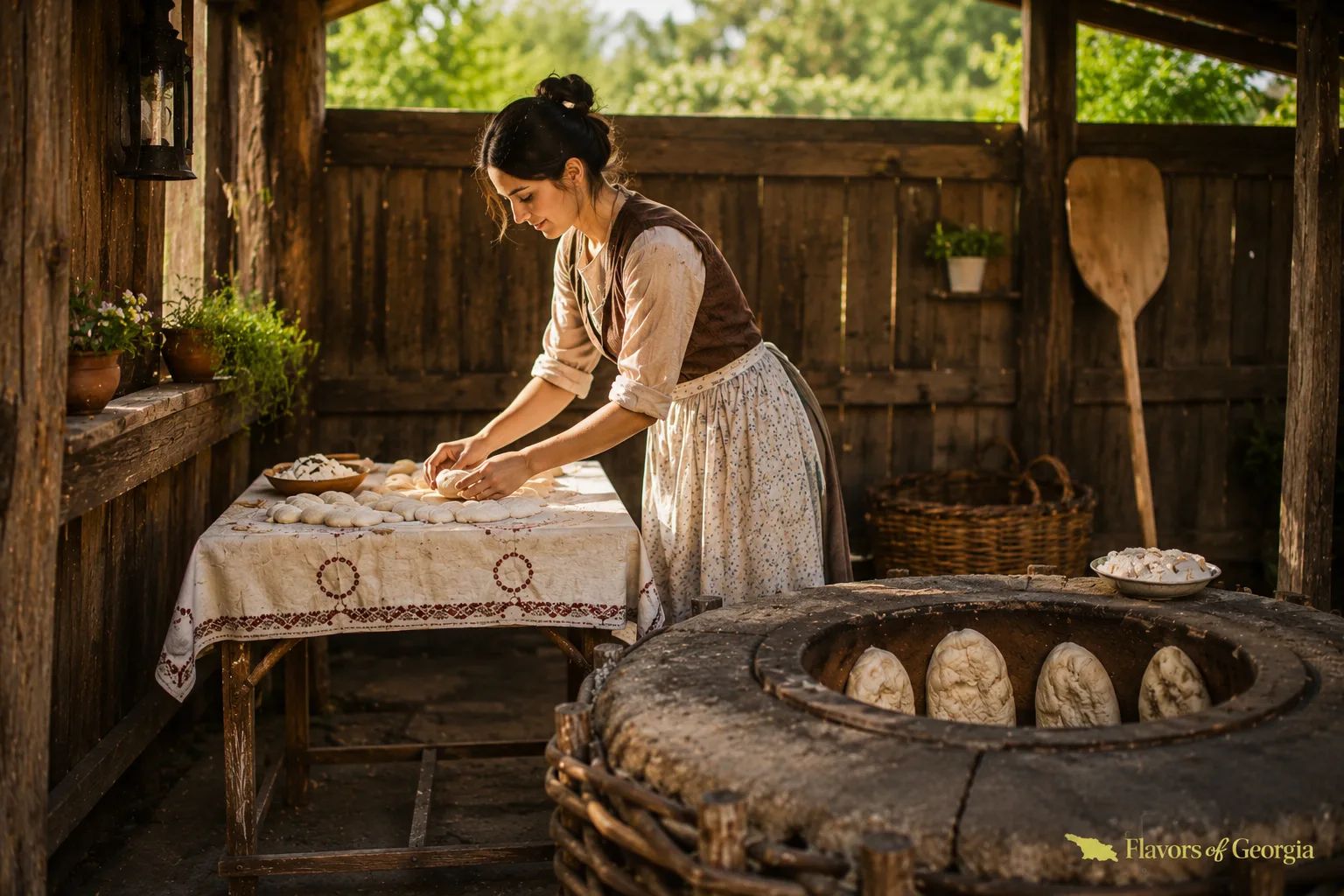
Working with a tone oven requires remarkable skill. Georgian bakers often train for years to master:
Dough hydration
Oven temperature control
Dough stretching technique
Timing
Bread placement inside the oven
The baker uses a special padded tool to place the dough safely against the burning-hot oven walls.
Watching a Georgian baker work is almost theatrical — quick movements, precise timing, and intense heat all combine into a centuries-old culinary performance.
Different Types of Georgian Bread
While shoti is the most famous, Georgia has many traditional breads, each connected to regional traditions.
Shoti
Long canoe-shaped bread with crispy crust.
Dedas Puri
Often used interchangeably with shoti, meaning “mother’s bread.”
Lavashi
Thin Georgian flatbread popular throughout the country.
Kakhuri Bread
A thicker rustic bread common in Kakheti.
Bread and the Georgian Supra
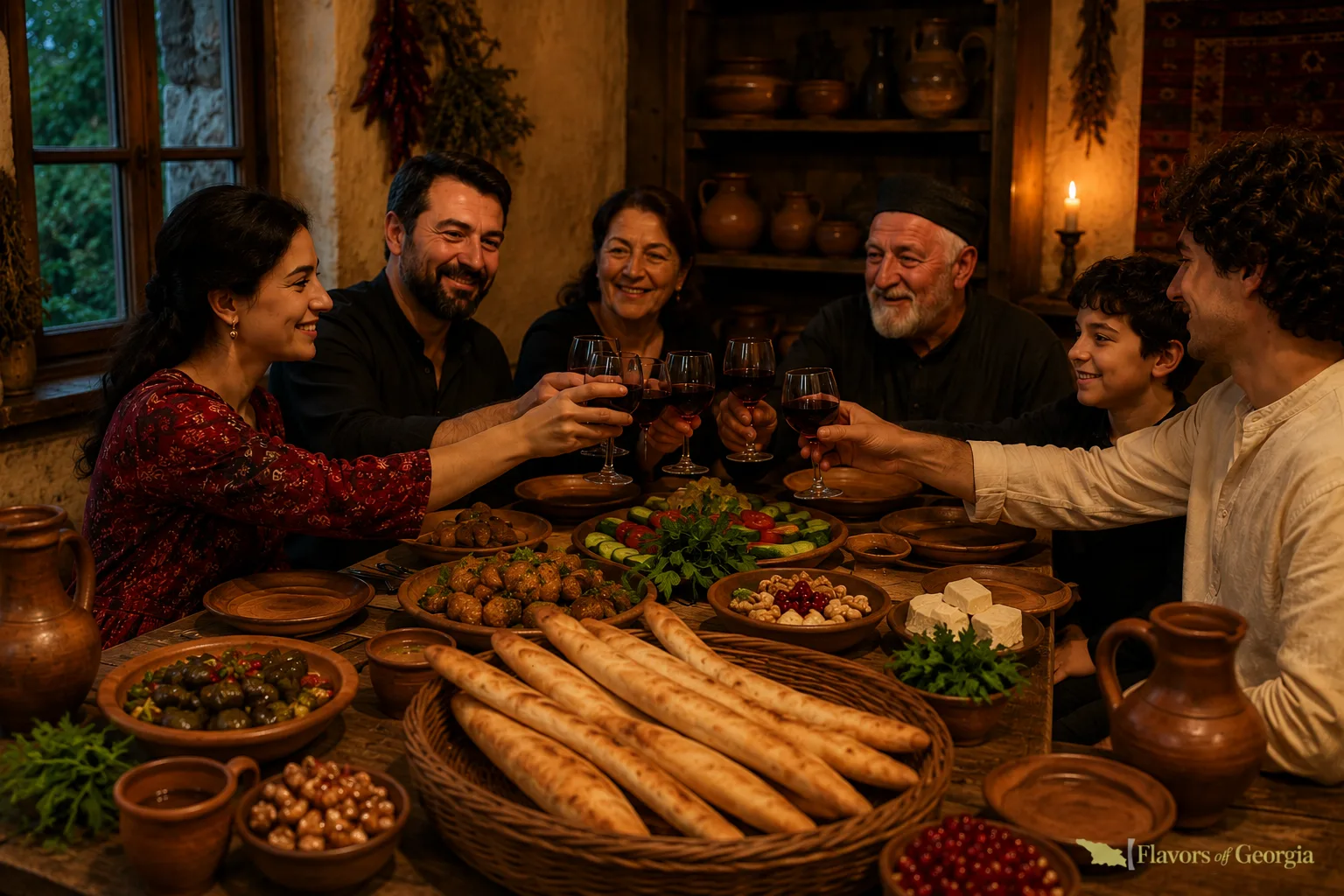
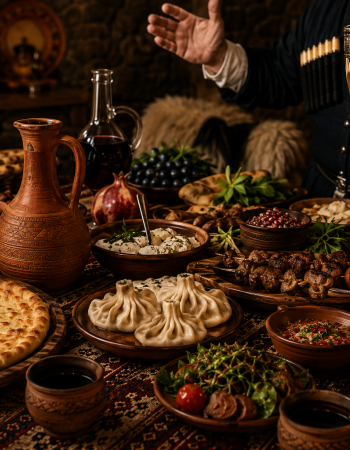
No Georgian supra is complete without fresh bread. Shoti bread accompanies nearly every traditional dish:
Khinkali
Kharcho
Lobio
Cheese platters
Mtsvadi
Salads
Pkhali
Freshly baked bread is often torn and shared communally during meals, symbolizing warmth and togetherness.
In many villages, local bakeries remain gathering places where neighbors meet daily while buying warm bread directly from the tone.
The Aroma of Georgian Streets
One of the most memorable experiences for visitors in Georgia is walking past a neighborhood bakery early in the morning.
The smell of fresh shoti bread drifting through the streets is deeply nostalgic for Georgians and unforgettable for tourists.
Traditional bakeries can still be found throughout:
Tbilisi
Kakheti
Kutaisi
Batumi
Small mountain villages
Many bakeries continue using wood-fired tone ovens exactly as generations before them did.
Modern Georgian Bakeries
Today, Georgian bread traditions continue to evolve. Modern bakeries combine traditional tone baking methods with contemporary production techniques.
Restaurants often serve artisan versions of shoti alongside gourmet Georgian cuisine, while home bakers experiment with modern ovens adapted to imitate traditional tone baking.
Despite modernization, authentic tone-baked bread remains unmatched in flavor and cultural significance.
Bread as a Symbol of Hospitality
In Georgian culture, offering bread to guests symbolizes generosity, blessing, and respect.
Bread and wine together form the foundation of Georgian hospitality — two elements deeply rooted in the country’s identity.
For centuries, Georgian families have gathered around warm bread, sharing meals, stories, and traditions that continue to shape Georgian life today.
Conclusion
Shoti bread and the traditional tone oven represent far more than baking techniques. They embody Georgian history, craftsmanship, hospitality, and cultural memory.
From ancient clay ovens to modern bakeries, the tradition of Georgian bread-making continues to unite generations and preserve one of the country’s most treasured culinary customs.
The simple act of breaking warm bread at a Georgian table remains one of the purest expressions of Georgian culture.

Search Recipes by category

 45
45  Chef Beso

Login Required
Loading login form...