

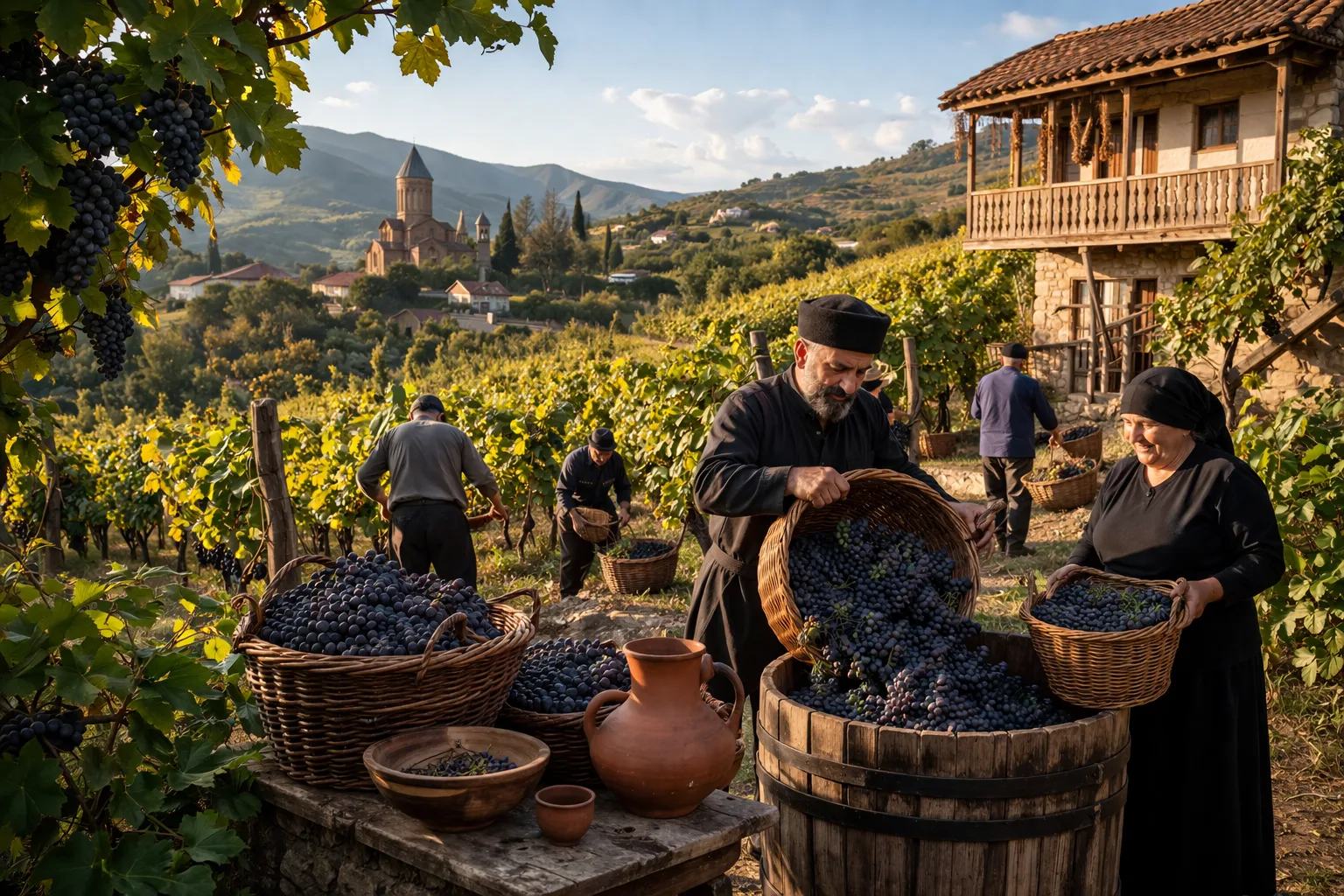
Photos generated by AI
Introduction
Rtveli, the traditional Georgian grape harvest, is one of the most important and joyful events in Georgian culture.
More than simply collecting grapes, Rtveli is a celebration of family, friendship, hard work, wine, music, and tradition. Every autumn, villages across Georgia come alive with the sounds of laughter, singing, and the harvesting of ripe grapes from vineyards that have been cultivated for generations.
For Georgians, wine is deeply connected to identity and history, and Rtveli represents the beginning of the sacred journey from grape to wine.
From Kakheti to Imereti, families gather together to harvest grapes by hand, prepare traditional food, make fresh wine, and celebrate the abundance of the season.
What Is Rtveli?
Rtveli is the traditional grape harvest season in Georgia.
It usually takes place during early autumn, mainly in:
September
October
The exact timing depends on:
Region
Weather
Grape variety
Sugar levels in the grapes
The harvest is especially important in wine-producing regions such as:
Kakheti
Kartli
Imereti
Racha
Samegrelo
Rtveli as a Family Tradition
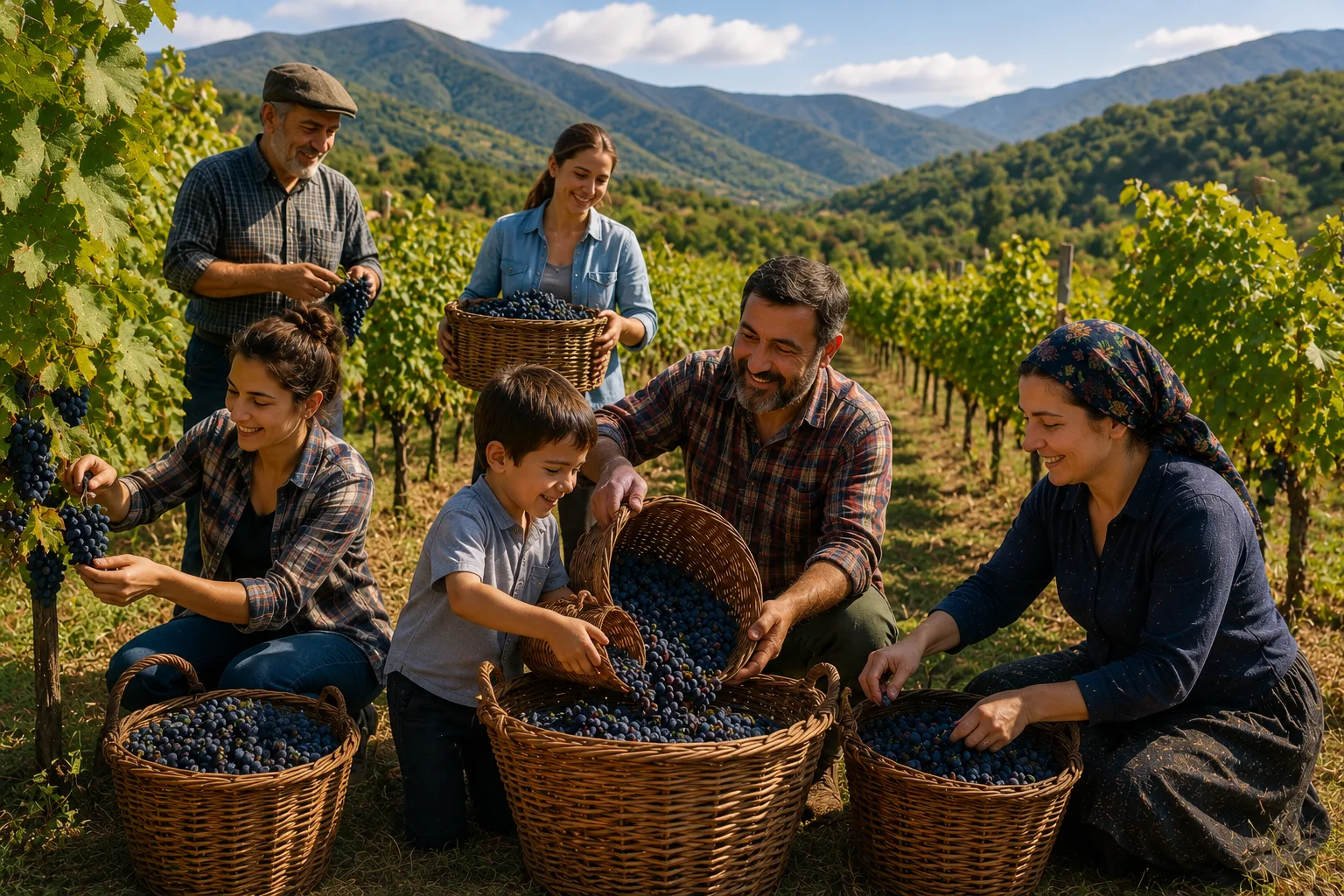
Rtveli is not only agricultural work — it is also a major family event.
Relatives and friends often travel from cities to villages to help with the harvest. Vineyards become full of activity as people:
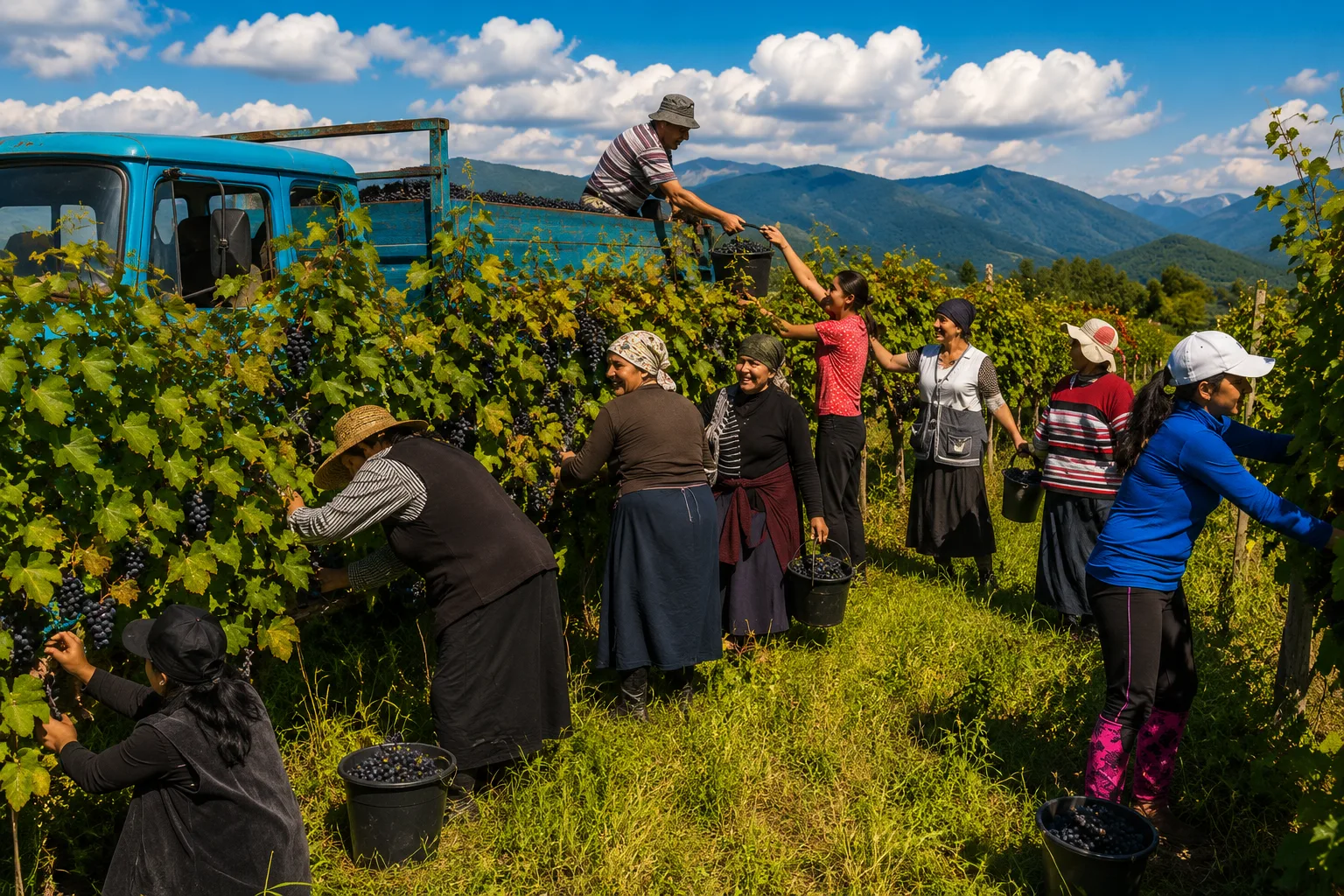
Cut grape clusters by hand
Carry baskets of grapes
Sort the harvest
Prepare food for workers
Sing traditional songs
The atmosphere is both hardworking and festive.
For many Georgians, Rtveli creates some of the strongest childhood memories.
Traditional Georgian Grape Harvesting
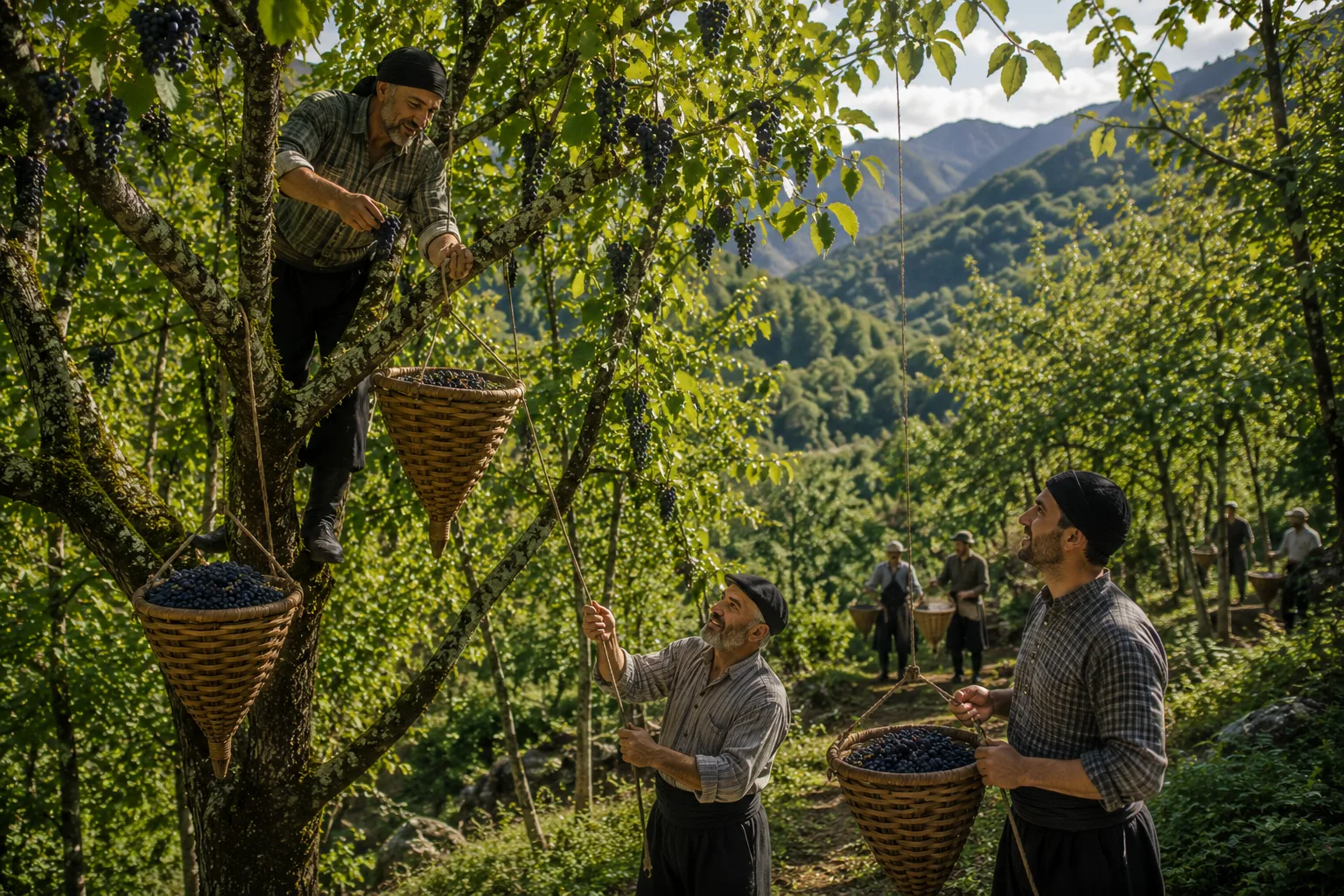
In Georgia, grapes are traditionally harvested by hand.
Workers carefully cut grape clusters and place them into:
Wooden baskets
Plastic crates
Traditional harvesting containers
The grapes are then transported to:
Marani (wine cellar)
Pressing area
Traditional satsnakheli (wooden grape press)
Hand harvesting helps protect the grapes and maintain wine quality.
The Satsnakheli: Traditional Georgian Grape Press
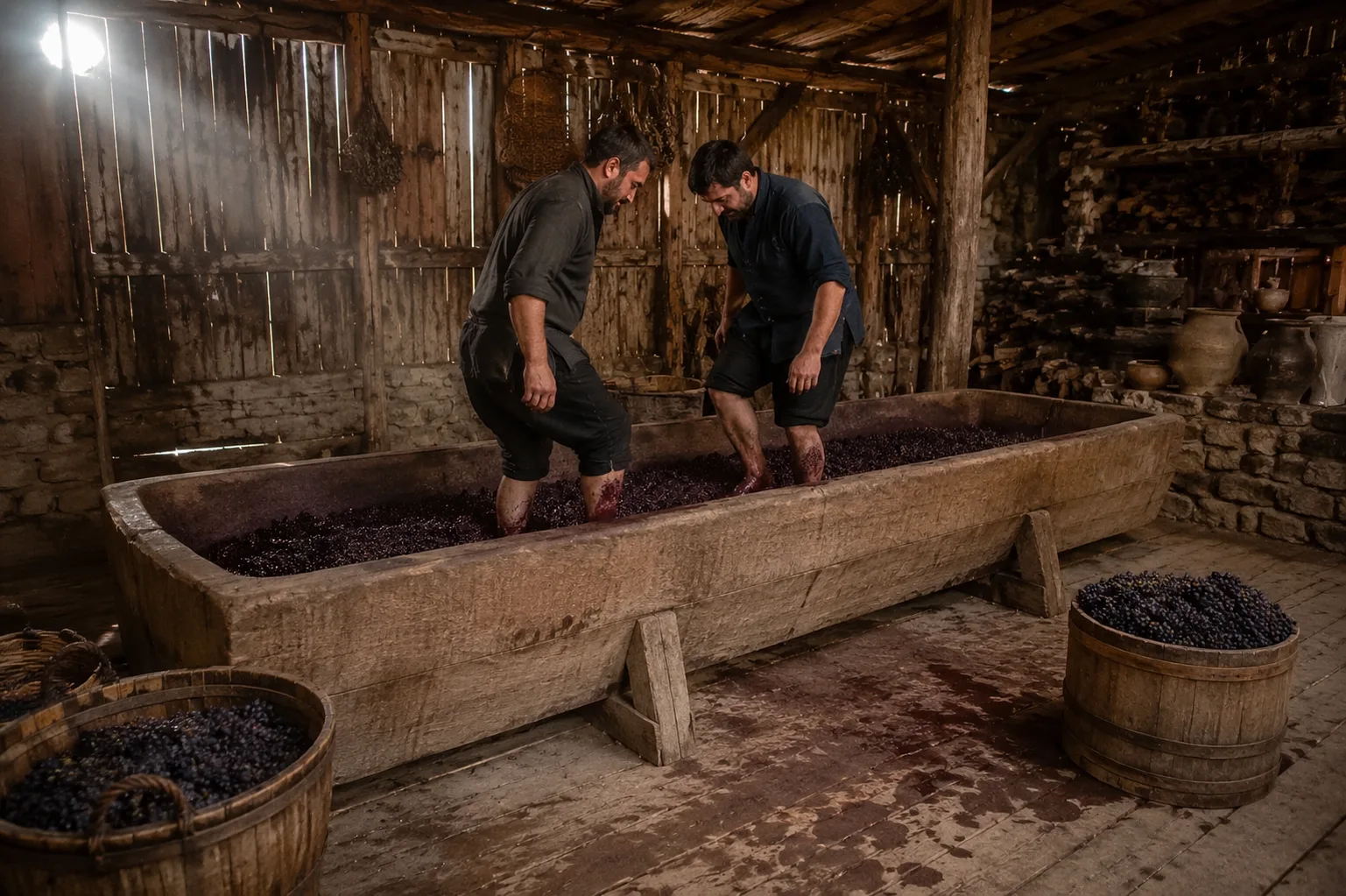
One of the oldest and most iconic parts of Rtveli is the satsnakheli — the traditional wooden grape press.
The satsnakheli is usually made from large carved wood and shaped like a long open container.
Traditionally, people stood barefoot inside the satsnakheli and crushed grapes using their feet.
As grapes were pressed:
Juice flowed naturally
Grape skins and seeds remained inside
Fresh juice was collected for wine production
This process remains one of the most symbolic images of traditional Georgian winemaking.
Even today, some villages continue this practice during festivals and traditional Rtveli celebrations.
Rtveli in Kakheti
Kakheti is considered the center of Georgian wine culture.
During Rtveli, Kakheti becomes especially lively as vineyards fill with workers harvesting grapes under the autumn sun.
Common grape varieties include:
Saperavi
Rkatsiteli
Kisi
Mtsvane
After harvesting, many families continue directly to the marani to begin wine production in qvevri.
Food and Supra During Rtveli
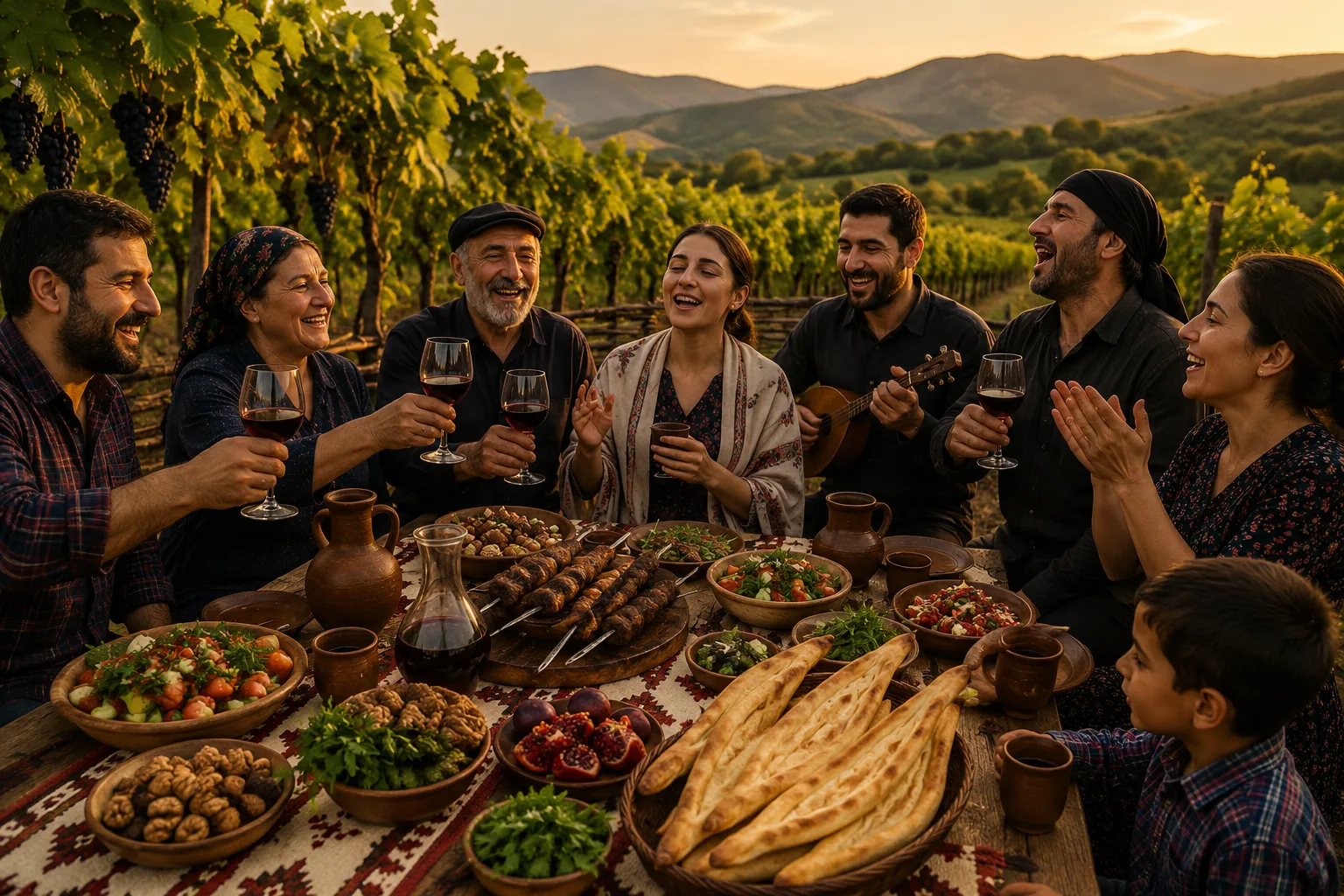
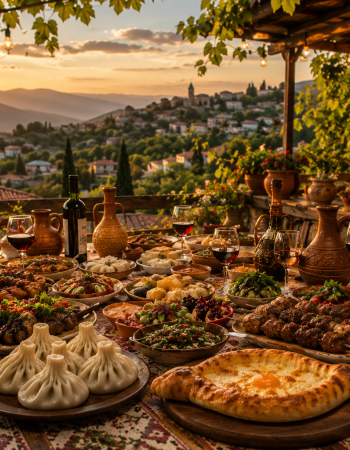
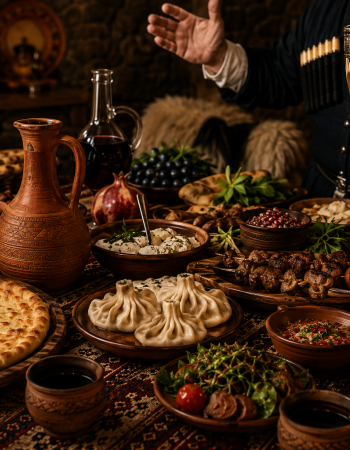
No Rtveli is complete without a traditional Georgian supra.
After long hours of harvesting, families and workers gather around large tables filled with:
Khinkali
Mtsvadi
Khachapuri
Fresh vegetables
Churchkhela
Homemade wine
Chacha
Music, toasts, and laughter continue late into the evening.
Rtveli supras celebrate:
Nature
Harvest
Friendship
Gratitude
Qvevri and Fresh Wine
After the grapes are pressed, the juice is transferred into traditional qvevri vessels buried underground.
Georgia’s ancient qvevri winemaking method is recognized by UNESCO as part of the world’s intangible cultural heritage.
Inside the qvevri:
Fermentation begins naturally
Wine develops slowly
Traditional Georgian wine gains its unique character
Rtveli marks the beginning of this ancient winemaking process.
Songs, Music, and Celebration
Traditional Georgian music is an important part of Rtveli.
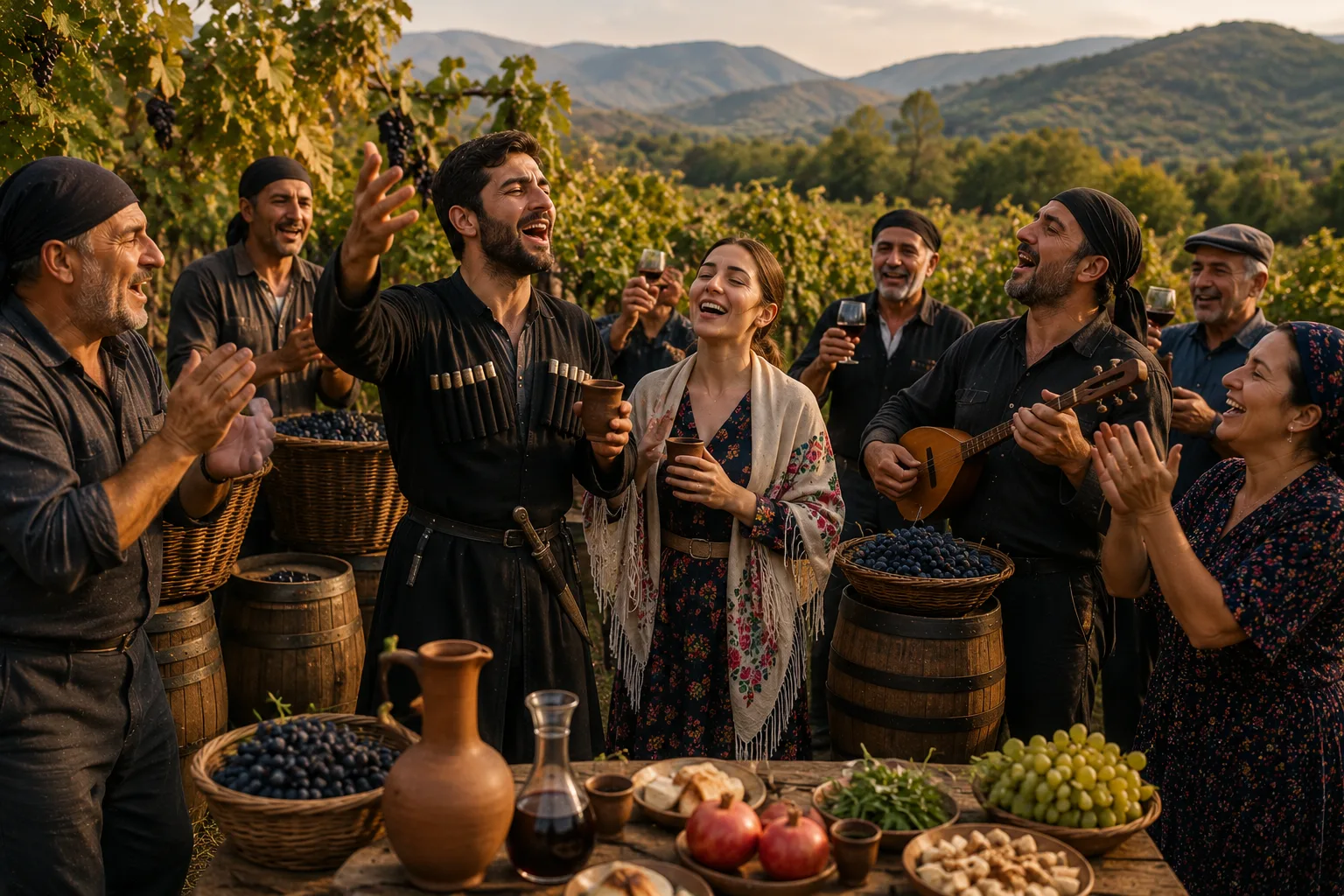
Harvest workers often sing:
Folk songs
Polyphonic songs
Regional melodies
Music helps create energy and joy during long working days.
In many villages, Rtveli feels more like a festival than simple agricultural labor.
Modern Rtveli
Today, Rtveli combines both ancient tradition and modern winemaking.
Large wineries use modern equipment and machinery, while many families still preserve traditional harvesting and qvevri methods.
Modern Rtveli also attracts:
Tourists
Wine lovers
Photographers
International visitors
Many travelers visit Georgia specifically to experience Rtveli firsthand.
Why Rtveli Matters
Rtveli represents far more than wine production.
It reflects:
Georgian hospitality
Family unity
Agricultural heritage
Ancient winemaking culture
Respect for nature
For centuries, Rtveli has remained one of the strongest symbols of Georgian identity.
Conclusion
Rtveli is one of the most beautiful traditions in Georgia.
From hand-harvested grapes and wooden satsnakheli presses to supras, songs, and qvevri wine, Rtveli connects generations through celebration and shared work.
Every grape harvested carries a story — and every bottle of Georgian wine begins with Rtveli.


Search Recipes by category

 45
45  Chef Beso

Login Required
Loading login form...