


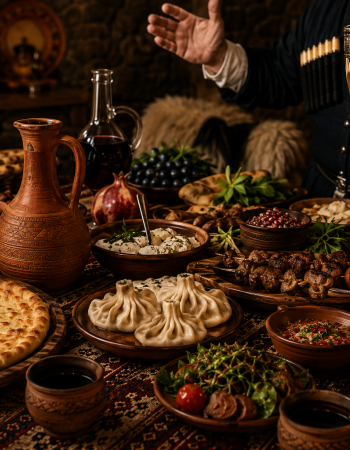
Photos generated by AI
Introduction
Georgia is widely recognized as one of the oldest wine-producing countries in the world.
For thousands of years, wine has been deeply connected to Georgian culture, family traditions, hospitality, religion, and everyday life. Archaeological discoveries have confirmed that winemaking in Georgia dates back more than 8,000 years, making the country one of the birthplaces of wine civilization.
From ancient clay qvevri buried underground to modern wineries exporting bottles across the world, Georgian wine remains one of the strongest symbols of the nation’s identity.
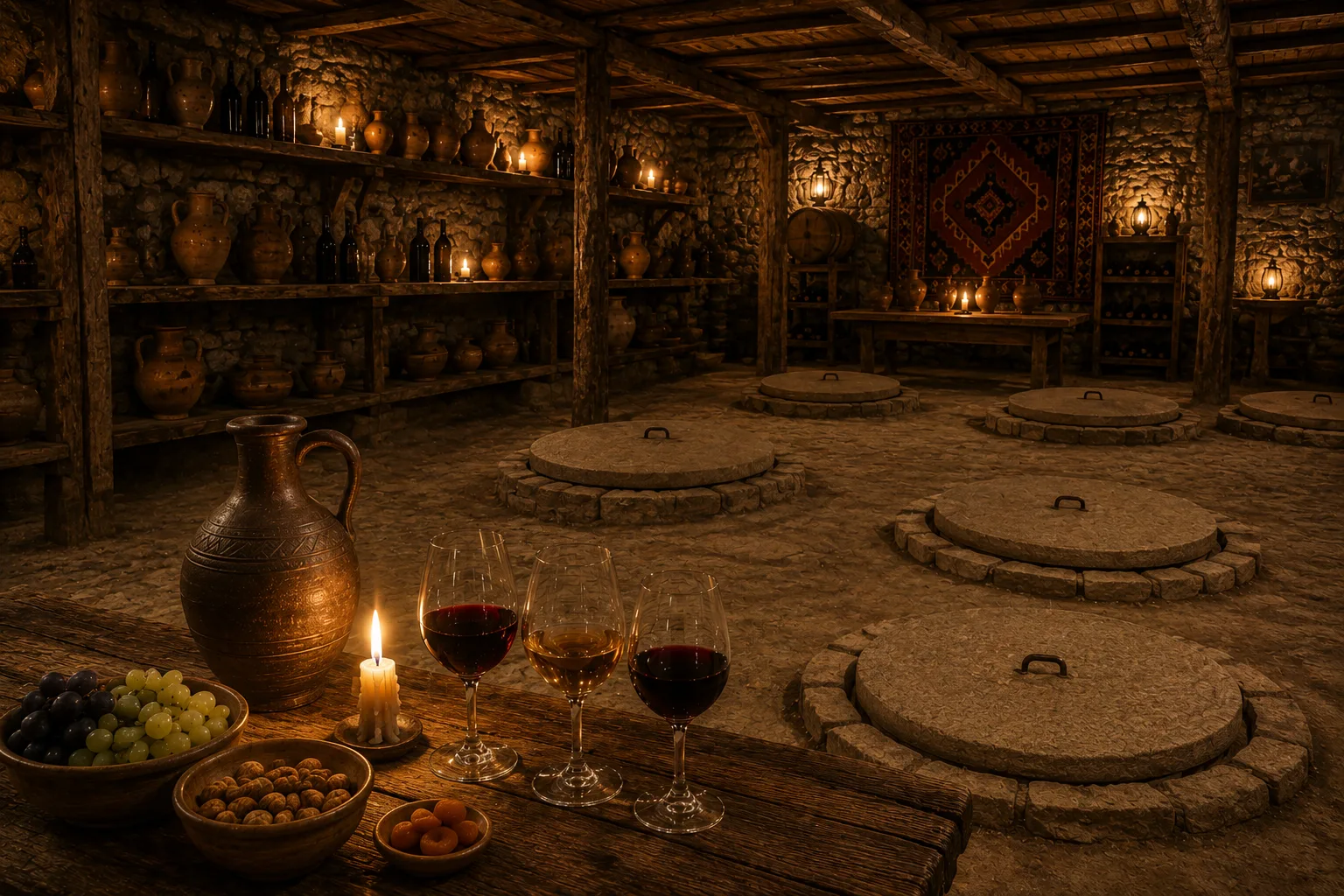
The Ancient Origins of Georgian Wine
Archaeologists discovered ancient grape seeds and wine residue in clay vessels found in Georgia dating back approximately 6,000 BC.
These discoveries proved that early Georgians were already:
Cultivating grapes
Fermenting wine
Storing wine in clay vessels
Developing organized winemaking traditions
Wine quickly became more than simply a drink — it became part of Georgian spirituality, celebration, and family life.
Qvevri: Georgia’s Unique Winemaking Method
One of the most important parts of Georgian wine culture is the qvevri.
Qvevri are:
Large clay vessels
Buried underground
Used for fermentation and aging
Unlike modern steel tanks, qvevri allow wine to ferment naturally together with:
Grape skins
Seeds
Sometimes stems
This ancient process creates:
Rich flavor
Deep amber color
Natural texture
Complex aromas
In 2013, UNESCO recognized the Georgian qvevri winemaking method as part of the Intangible Cultural Heritage of Humanity.
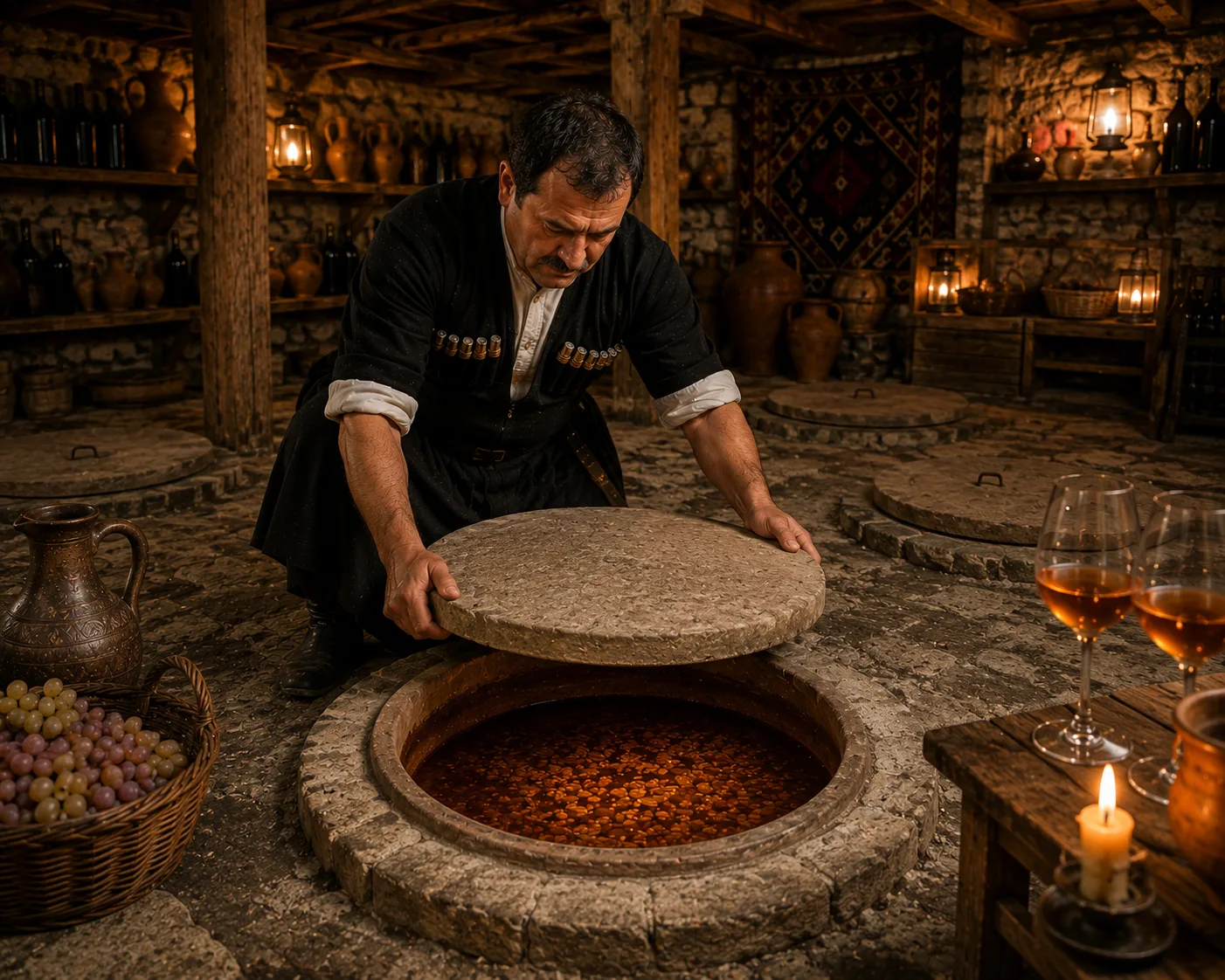
Amber Wine: Georgia’s Signature Style
Although many people call it “orange wine,” Georgians traditionally refer to it as amber wine.
Amber wine is produced by fermenting white grapes with their skins inside qvevri for extended periods.
The result is wine with:
Golden amber color
Strong body
Dry character
Complex earthy notes
This style has become internationally respected among wine enthusiasts and sommeliers.
Famous Georgian Wine Regions
Georgia has several major wine-producing regions, each with its own climate and grape varieties.
Kakheti
The largest and most famous wine region in Georgia.
Known for:
Qvevri wines
Saperavi
Rkatsiteli
Traditional marani culture
Imereti
Produces lighter and softer wines using western Georgian methods.
Racha
Famous for naturally semi-sweet wines like Khvanchkara.
Kartli
Known for sparkling wines and balanced white varieties.
Guria and Samegrelo
Traditional western Georgian regions with rare local grape varieties.
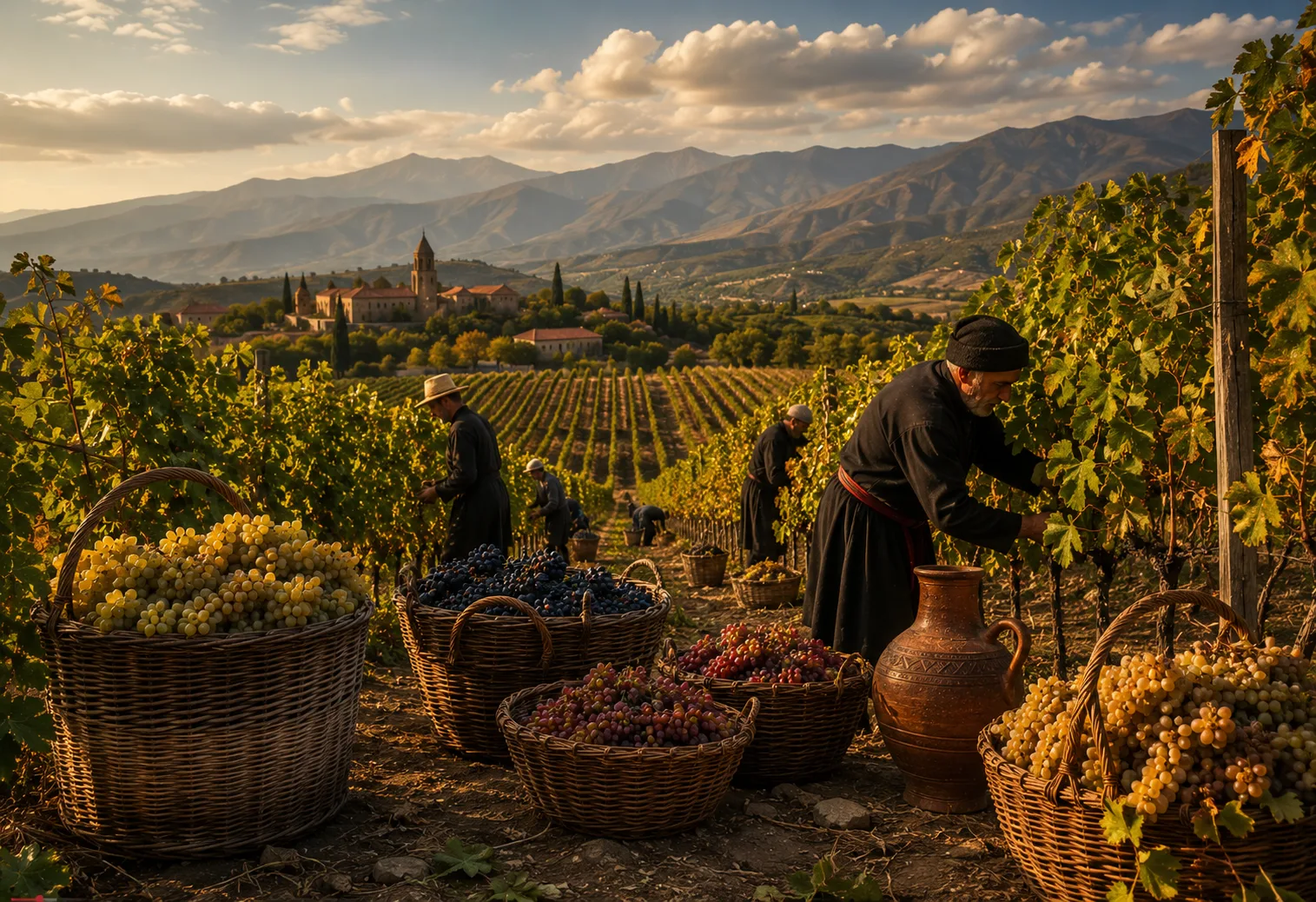
Indigenous Georgian Grape Varieties
Georgia has more than 500 native grape varieties, making it one of the most diverse grape cultures in the world.
Some of the most famous include:
Saperavi
Deep red wine grape
Rich and powerful flavor
Excellent aging potential
Rkatsiteli
Traditional white grape
Crisp acidity
Common in qvevri wines
Kisi
Aromatic white grape
Fruity and floral notes
Mtsvane
Light and refreshing white variety
Aleksandrouli and Mujuretuli
Used in Khvanchkara production.
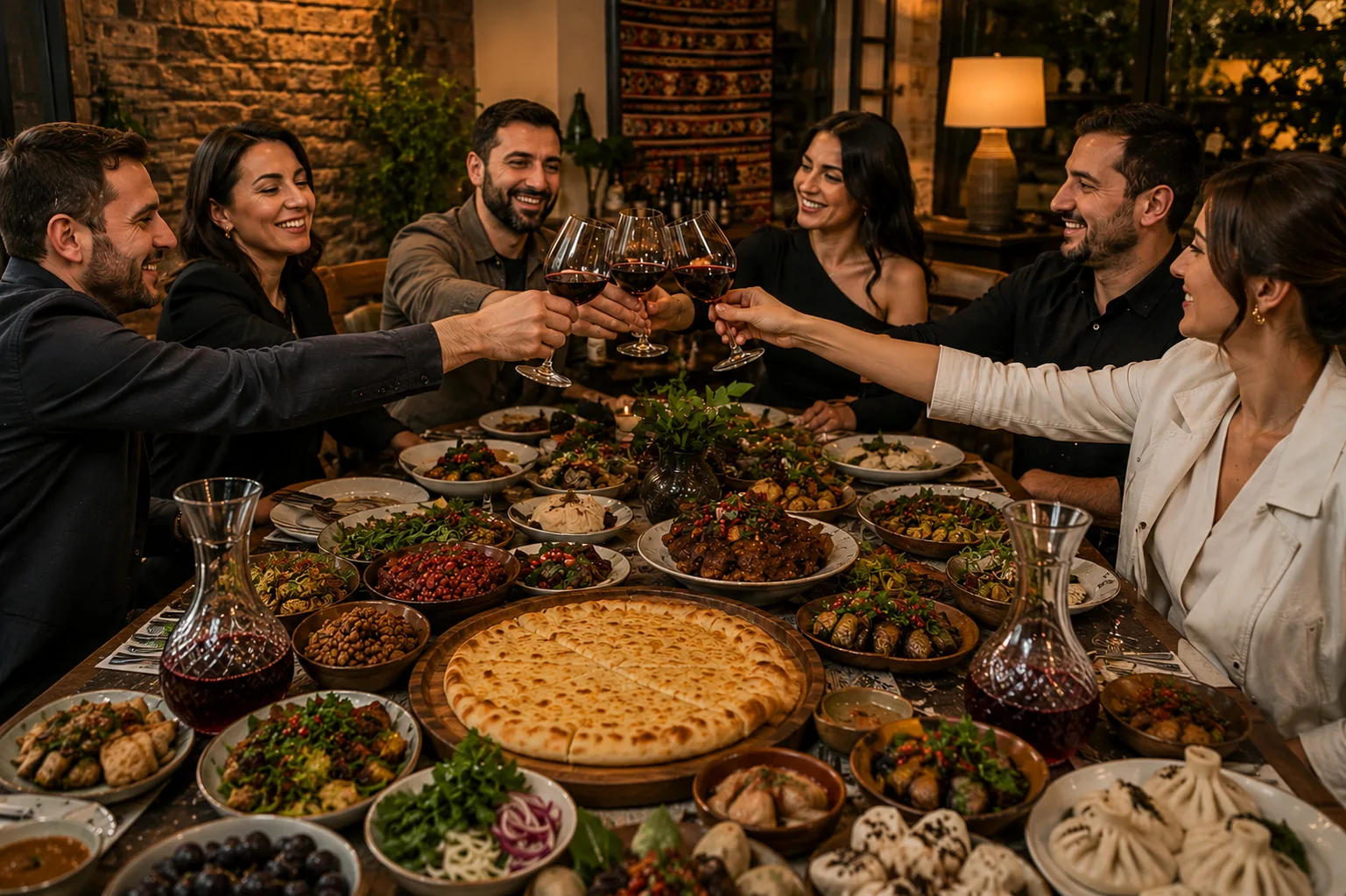
Wine and Georgian Supra
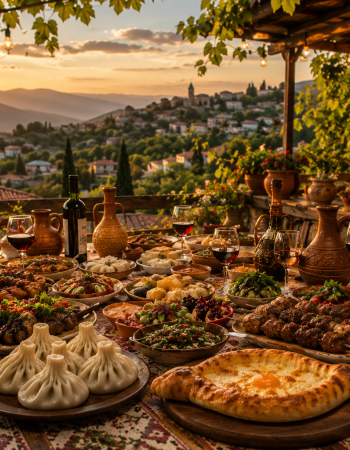
Wine is central to the Georgian supra.
At traditional gatherings:
Wine is poured generously
Toasts are led by the tamada
Each toast carries meaning and emotion
Wine represents:
Respect
Friendship
Family
Memory
Hospitality
Traditional clay cups, horns, and handmade glasses are often used during celebrations.
Traditional Marani
The marani is the traditional Georgian wine cellar.
A marani often contains:
Buried qvevri
Wooden beams
Clay vessels
Wine tools
Stone floors
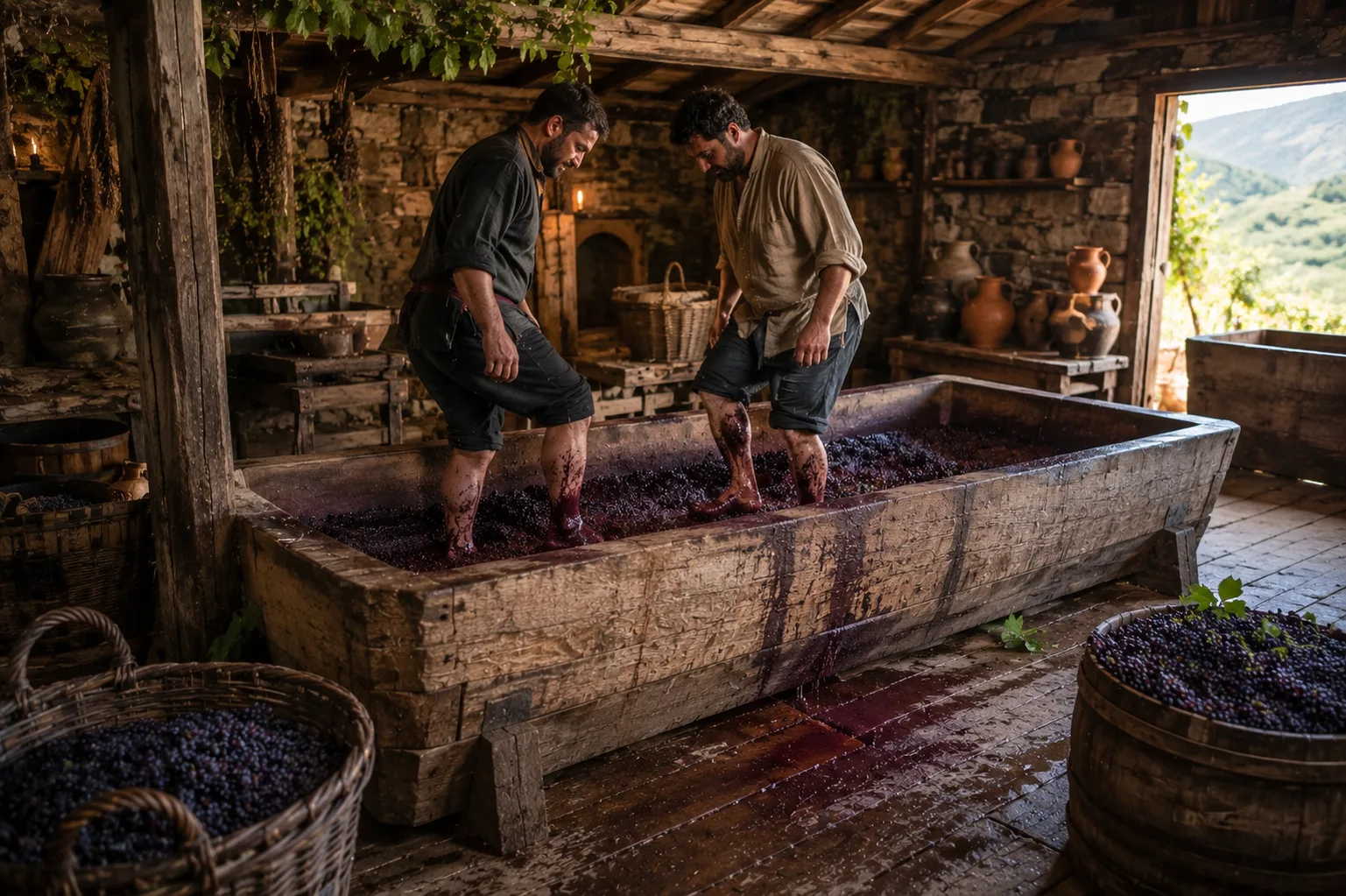
In villages, many families still maintain private maranis where homemade wine is produced every year during Rtveli.
Rtveli: The Georgian Grape Harvest
Rtveli is one of the most important traditions in Georgian culture.
Families and friends gather together to:
Harvest grapes
Press grapes
Prepare qvevri
Celebrate the new wine season
Rtveli combines:
Hard work
Food
Music
Wine
Family gatherings
It remains one of the most emotional and joyful periods of the year.
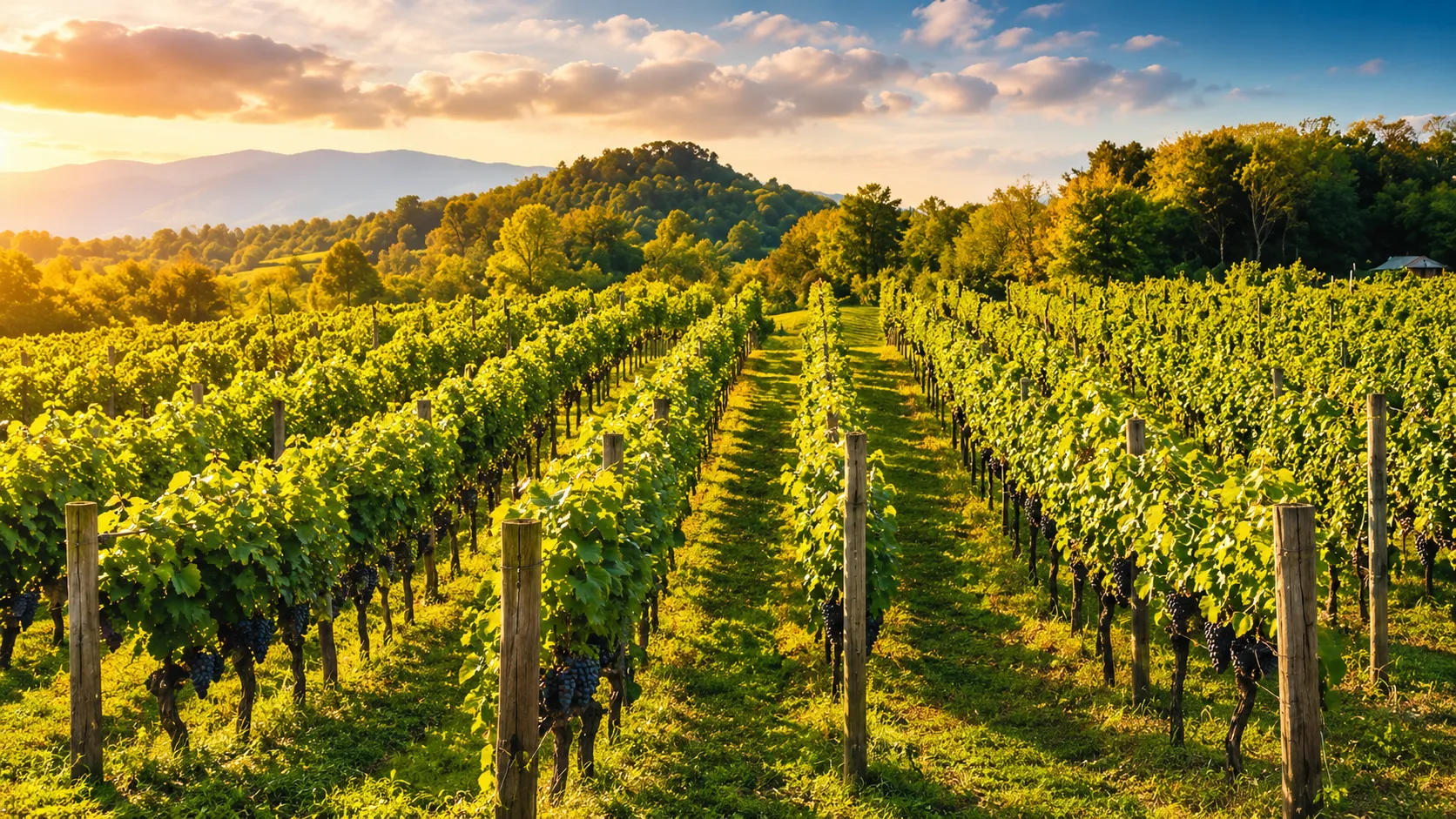
Modern Georgian Wine
Today, Georgian wine is gaining worldwide popularity.
Modern Georgian wineries combine:
Ancient qvevri traditions
International production standards
Boutique craftsmanship
Indigenous grape varieties
Georgian wines are now exported globally and increasingly appreciated by wine lovers seeking authentic and natural wines.
Why Georgian Wine Is Special
Georgian wine is unique because it combines:
Ancient history
Natural winemaking
Rare grape varieties
Family traditions
Cultural identity
Every bottle carries centuries of knowledge and tradition.
Georgian wine is far more than an alcoholic beverage — it is a living part of Georgian history and identity.
From ancient qvevri buried underground to modern vineyards stretching across the valleys of Kakheti, Georgian winemaking continues to preserve one of the oldest wine cultures in the world.
Every toast, every vineyard, and every marani tells the story of Georgia itself.


Search Recipes by category

 45
45  Chef Beso


Login Required
Loading login form...