

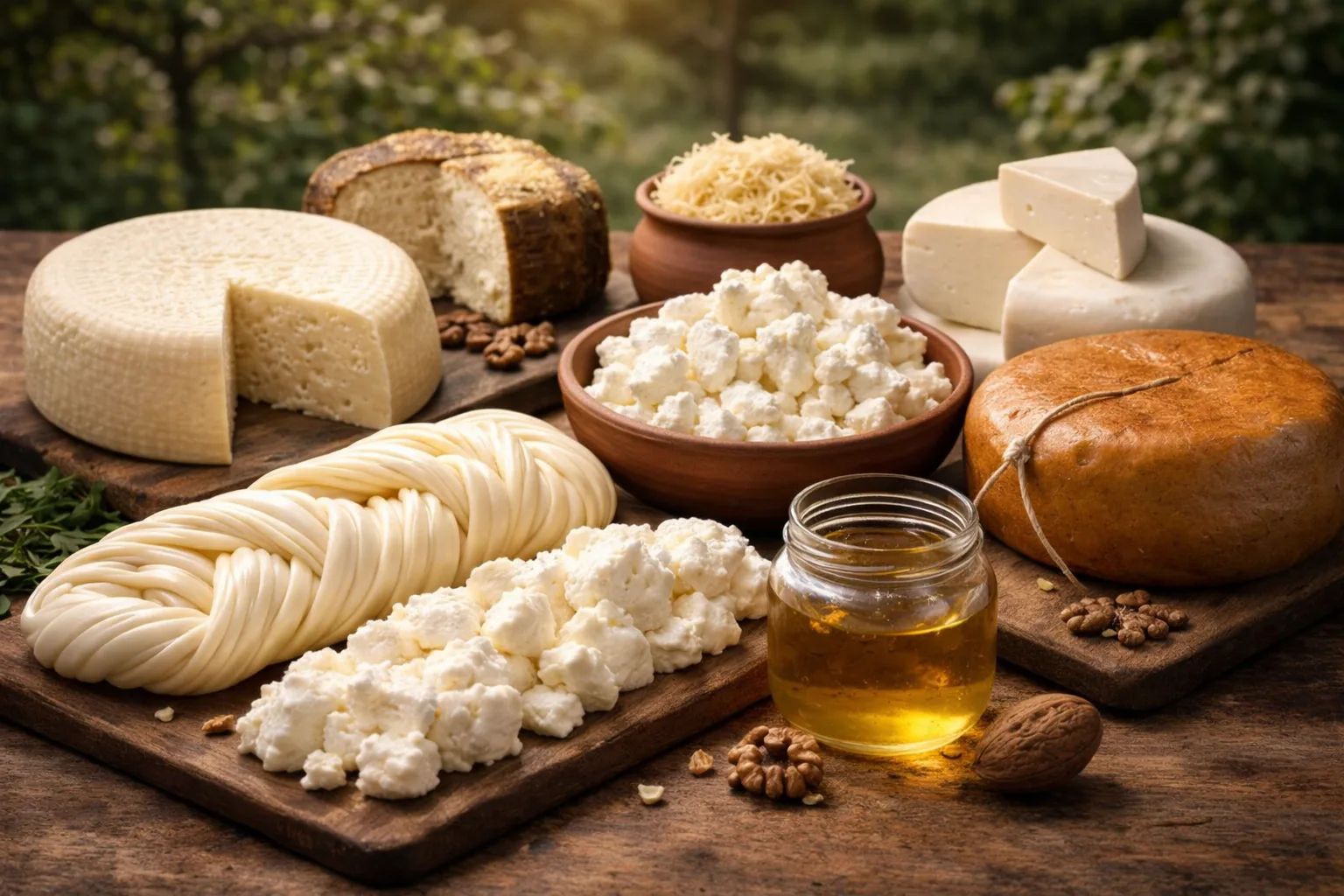
Photos generated by AI
Introduction
Georgian cheese is one of the oldest and most beloved parts of Georgian cuisine.
For centuries, cheese has been present on nearly every Georgian table — from everyday family meals to large festive supras. Every region of Georgia has developed its own unique cheese-making traditions, flavors, and textures, creating a rich culinary heritage deeply connected to the land and local culture.
From the salty and stretchy Sulguni to the rich and aged Guda cheese of the mountains, Georgian cheese reflects the diversity of Georgia itself.
Cheese in Georgia is more than food — it is tradition, hospitality, craftsmanship, and history.
The History of Georgian Cheese
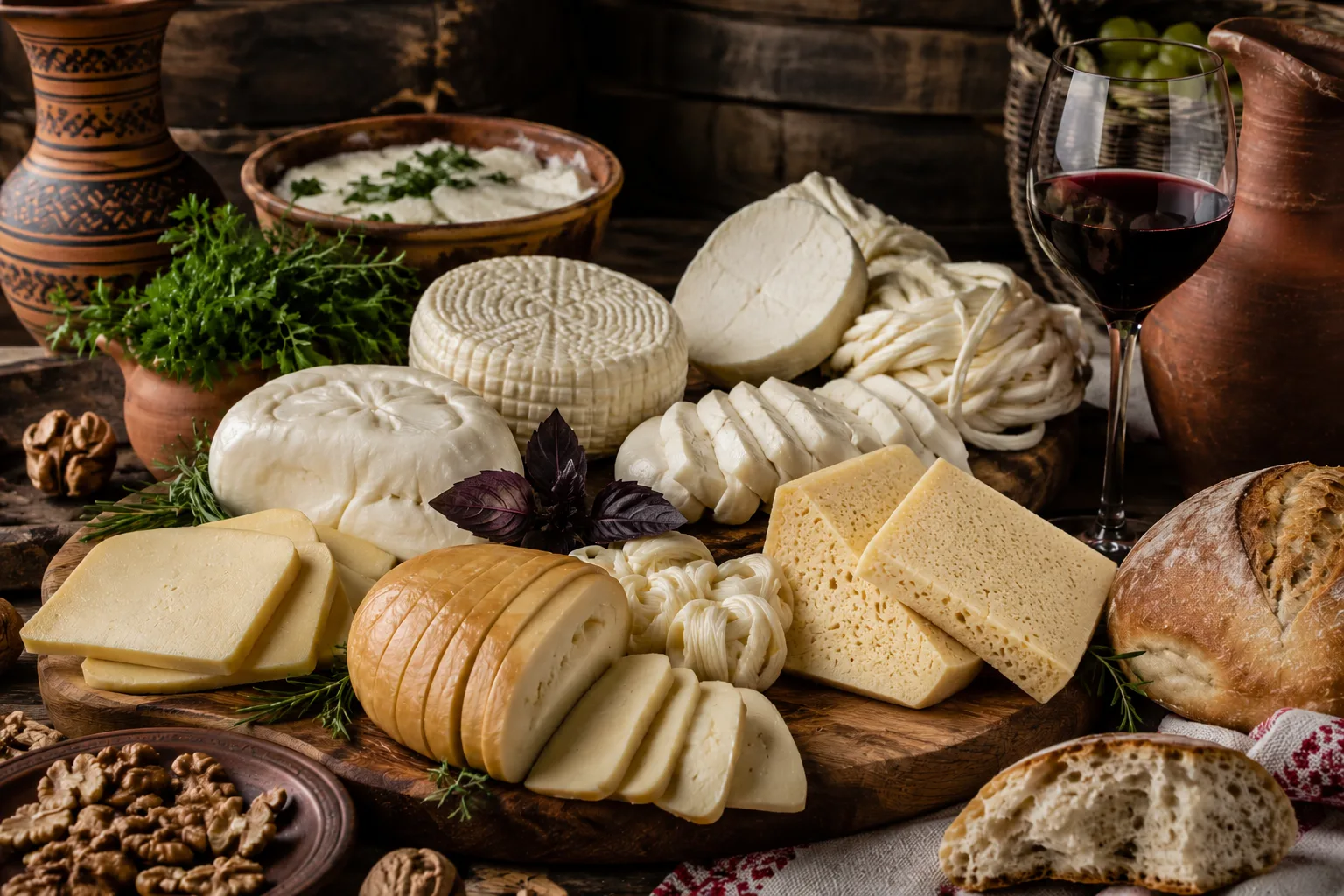
Cheese-making in Georgia dates back thousands of years.
Archaeological discoveries suggest that ancient Georgians were producing dairy products long before many European civilizations developed modern cheese-making methods.
Because Georgia has:
Mountain regions
Alpine pastures
Rich grazing lands
Sheep and cattle traditions
cheese naturally became an essential part of everyday life.
Over time, each region created its own styles using local milk, climate conditions, and traditional aging techniques.
Why Georgian Cheese Is Unique
Traditional Georgian cheese is usually made using:
Cow milk
Sheep milk
Buffalo milk
Mixed milk combinations
Unlike many industrial cheeses, traditional Georgian cheeses are often:
Handmade
Naturally aged
Preserved in brine
Smoked
Produced in villages using family methods
The result is bold flavor, rich texture, and incredible variety.
Sulguni: Georgia’s Most Famous Cheese
Sulguni is perhaps the most internationally recognized Georgian cheese.
Originating mainly from western Georgia, especially Samegrelo, Sulguni is known for its:
Stretchy texture
Mild salty flavor
Elastic consistency
Excellent melting qualities
Sulguni is commonly eaten:
Fresh
Smoked
Fried
Melted inside khachapuri
Smoked Sulguni has a particularly rich aroma and golden-brown exterior.

Guda Cheese: The Mountain Treasure
Guda cheese is one of Georgia’s oldest mountain cheeses.
Traditionally produced in mountainous regions such as:
Tusheti
Pshavi
Mtiuleti
Guda cheese is often aged inside:
Sheep skin
Natural containers
Mountain storage areas
It has:
Strong flavor
Dense texture
Sharp salty character
Authentic Guda is highly valued and considered a delicacy.
Imeruli Cheese
Imeruli cheese comes from the Imereti region and is one of the most commonly used cheeses in Georgia.
It is:
Soft
Mild
Slightly salty
Fresh
Imeruli is especially famous as the main filling for:
Imeruli khachapuri
Its balanced flavor makes it ideal for both cooking and everyday meals.
Tenili Cheese
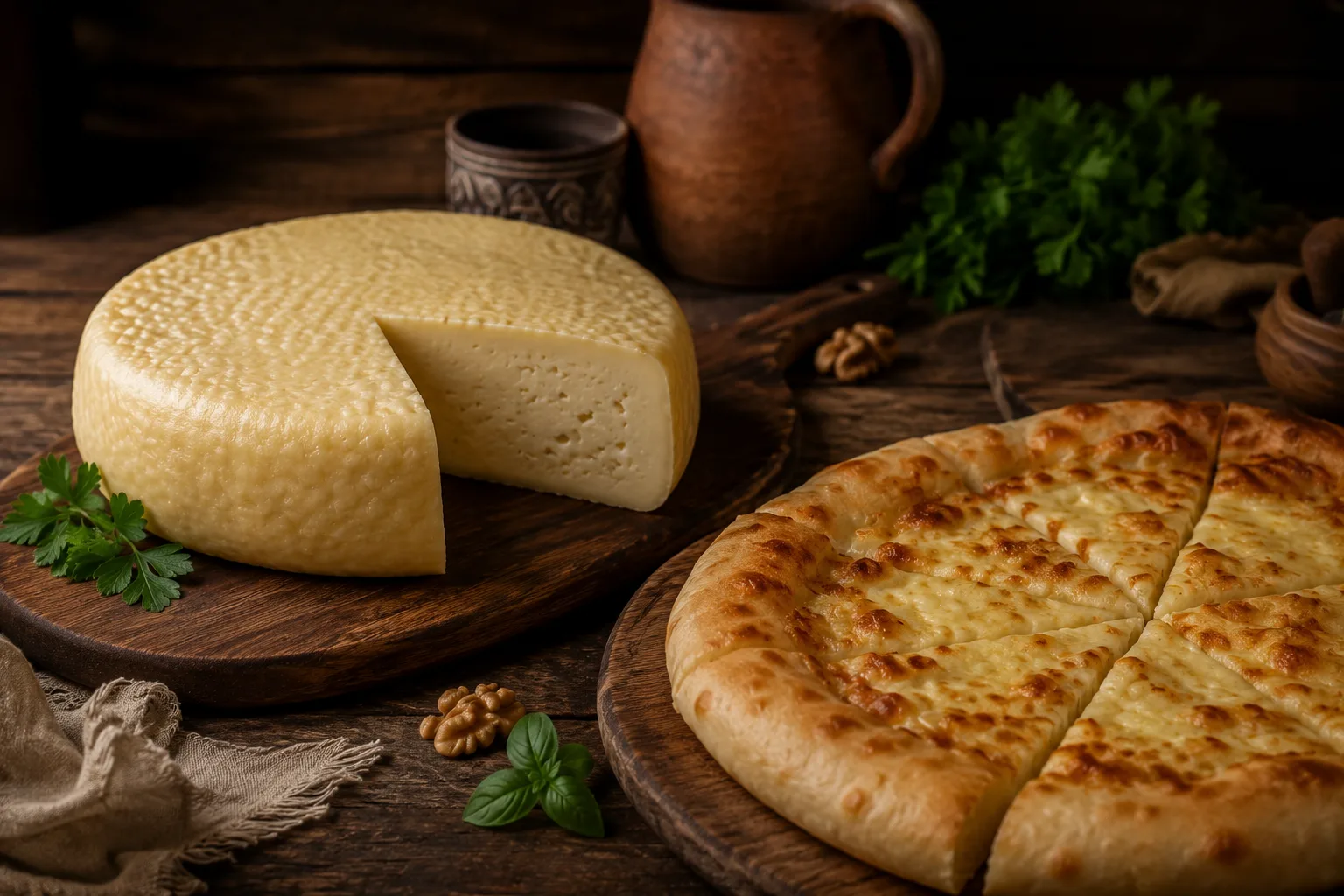
Tenili cheese is one of the rarest and most visually unique Georgian cheeses.
Produced mainly in Samtskhe-Javakheti, Tenili consists of:
Thin cheese threads
Creamy texture
Delicate aging process
The cheese is braided into long strands and stored in cream-filled clay containers.
Tenili is recognized as part of Georgia’s intangible cultural heritage.
Dambalkhacho: A Rare Mountain Cheese
Dambalkhacho is a traditional cheese from the mountainous region of Pshavi.
This unusual cheese is:
Fermented
Dried
Aged naturally
It develops:
Strong aroma
Intense flavor
Crumbly texture
Although uncommon outside Georgia, Dambalkhacho is highly respected in traditional mountain cuisine.
Cheese and Georgian Supra
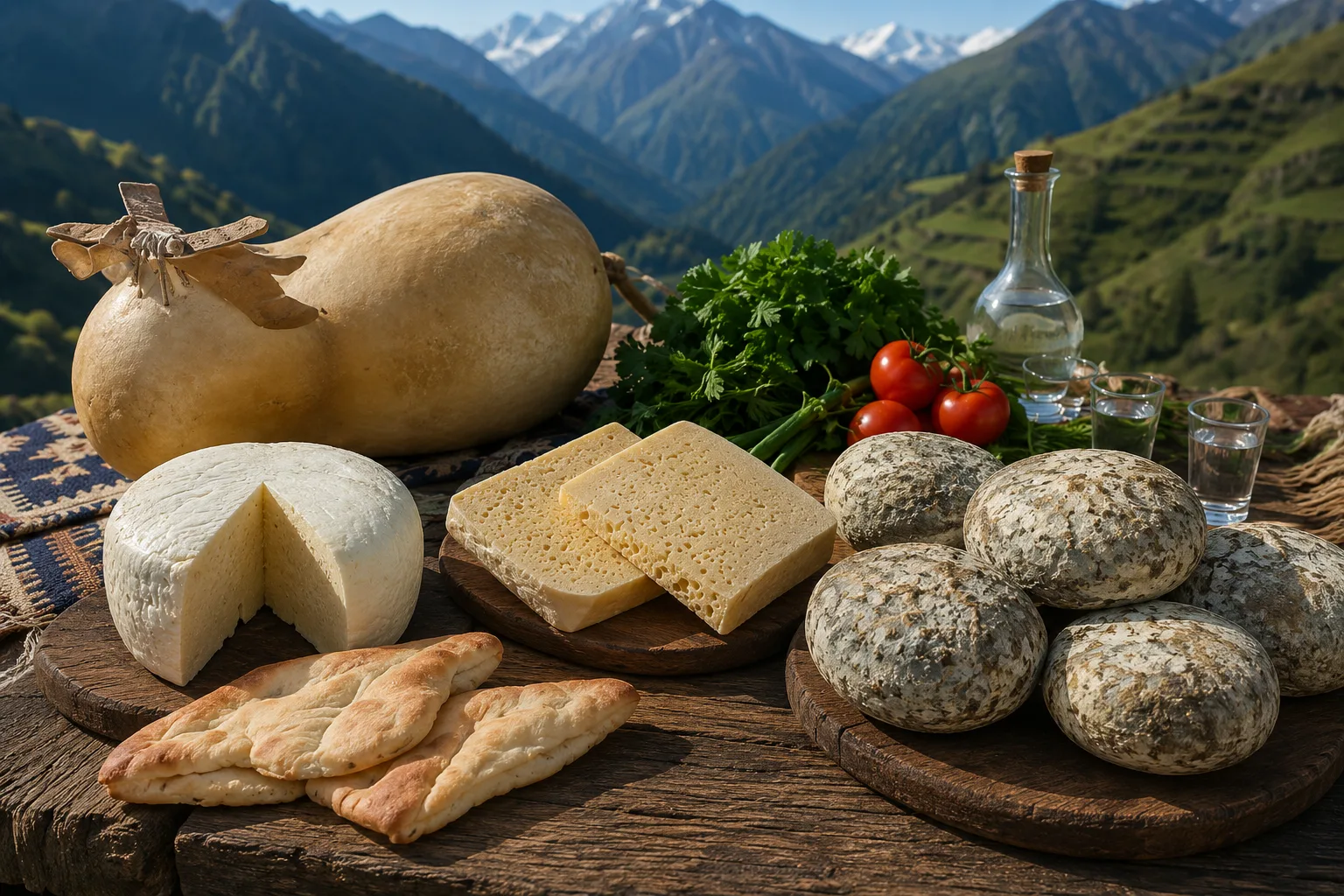
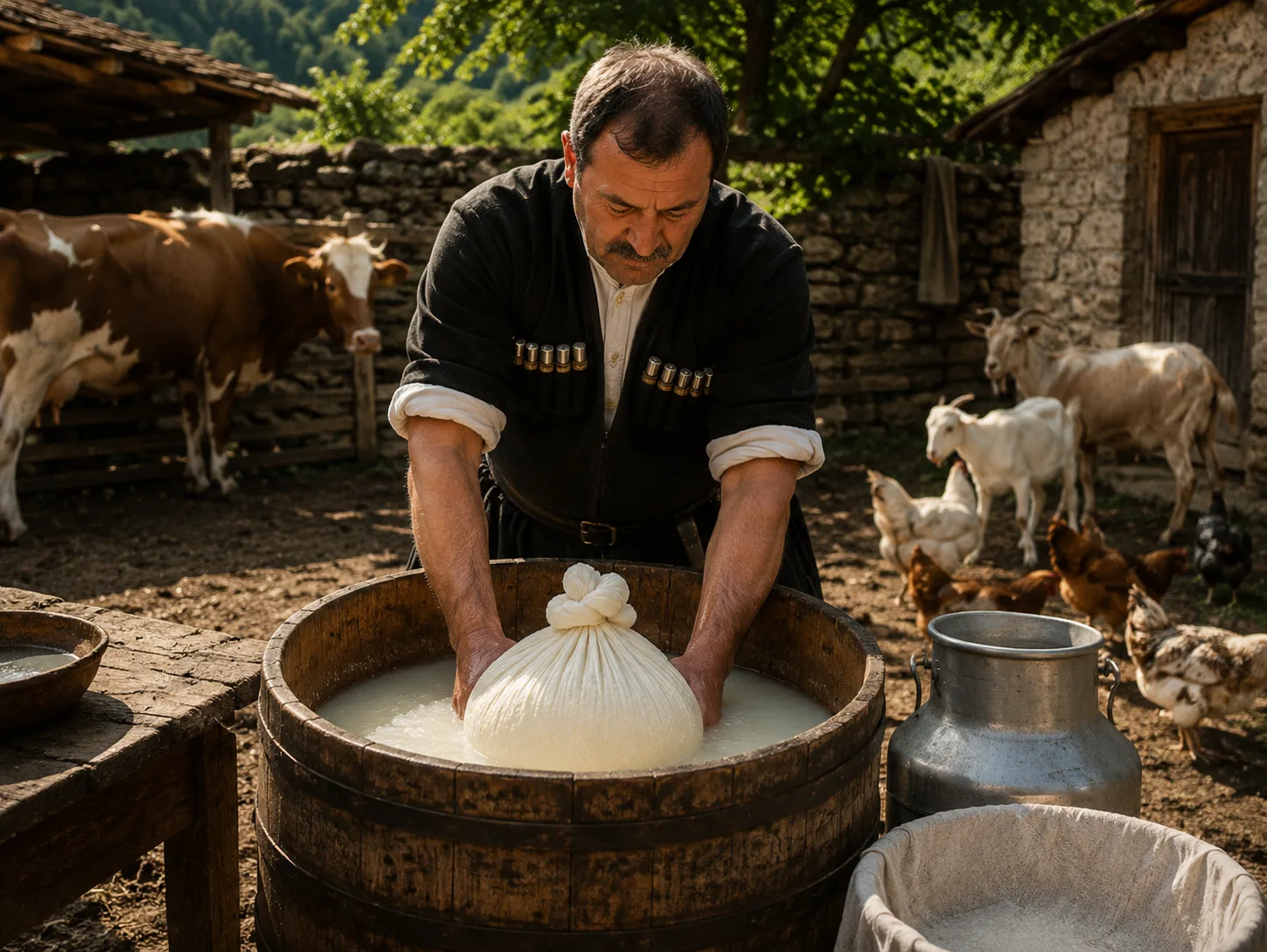
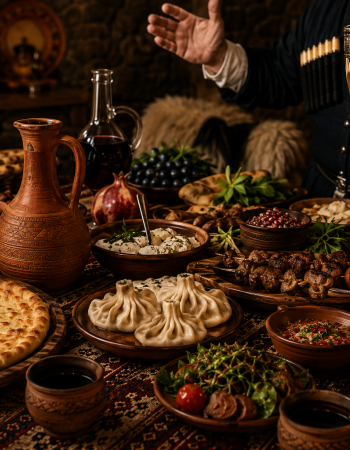
Cheese plays a central role in the Georgian supra.
It is commonly served alongside:
Fresh vegetables
Herbs
Bread
Wine
Churchkhela
Nuts
Different cheeses are often combined together on large serving platters.
In villages, homemade cheese is considered a symbol of hospitality and pride.
Georgian cuisine uses cheese in many iconic dishes, including:
Khachapuri
Elarji
Gebzhalia
Cheese pies
Traditional pastries
Melted cheese is especially important in western Georgian cooking.
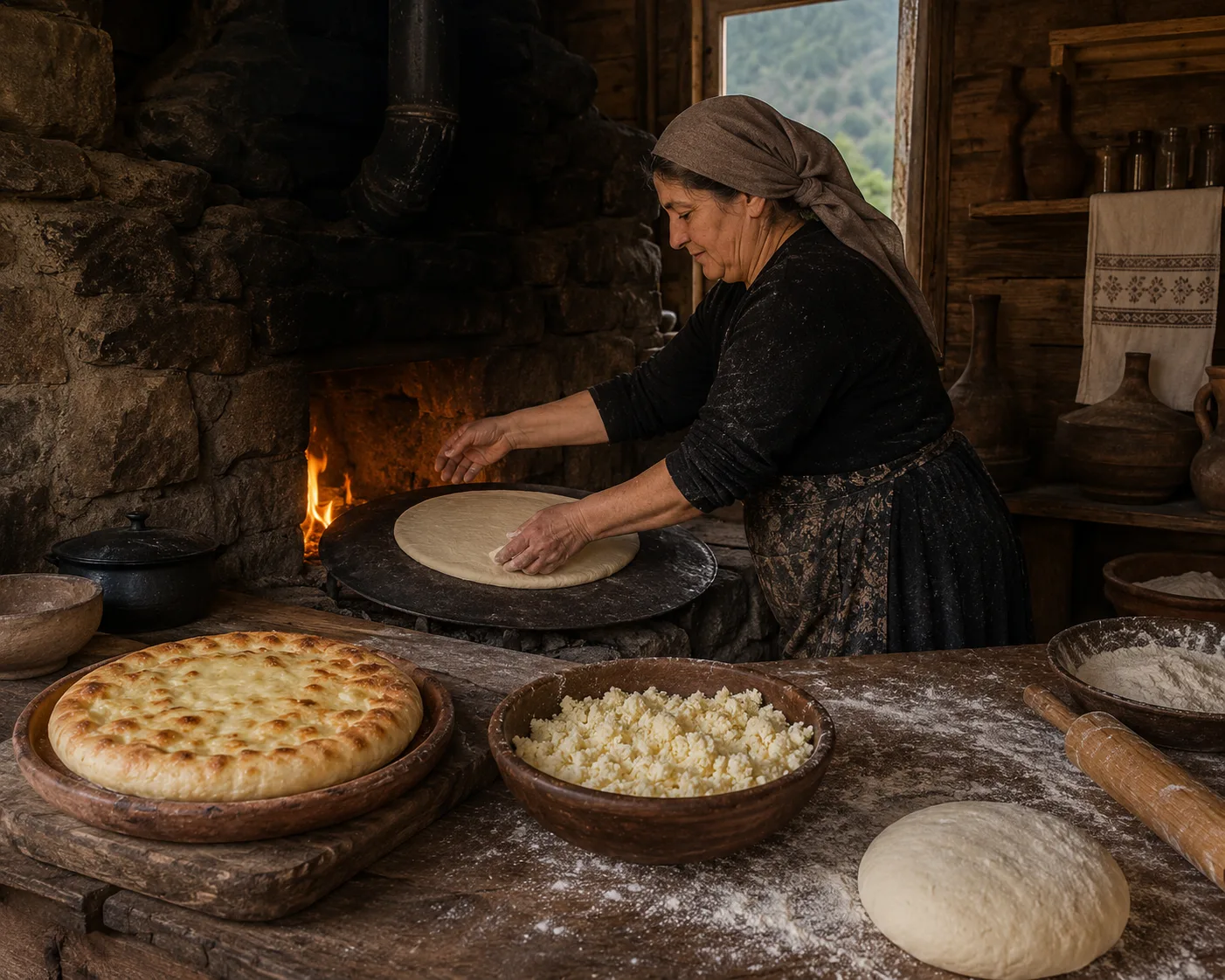
Traditional Cheese-Making Process
Many Georgian families still produce cheese using traditional techniques.
The process often includes:
Heating fresh milk
Adding natural cultures
Separating curds
Pressing cheese
Salting or aging
Some cheeses are:
Smoked over wood fires
Stored in brine
Aged underground
Traditional methods are often passed down through generations.
Modern Georgian Cheese
Today, Georgian cheese production combines:
Ancient traditions
Modern dairy technology
Artisan craftsmanship
Small farms and boutique producers are helping revive rare regional cheeses while introducing Georgian dairy culture to international audiences.
Georgian cheese is increasingly exported and appreciated worldwide.
Why Georgian Cheese Matters
Georgian cheese represents:
Regional identity
Mountain traditions
Family heritage
Hospitality
Agricultural culture
Every cheese tells a story about the people and landscapes of Georgia.
Georgian cheese is one of the richest parts of Georgia’s culinary identity.
From Sulguni and Imeruli to rare mountain cheeses like Guda and Dambalkhacho, every variety reflects centuries of craftsmanship and tradition.
Whether served with wine at a supra or melted into fresh khachapuri, Georgian cheese continues to connect generations through flavor, culture, and hospitality.


Search Recipes by category

 45
45  Chef Beso

Login Required
Loading login form...